Semantic Scholar
Semantic Scholar is a free AI-powered search engine for discovering relevant scientific papers across 211+ million archived publications.
Semantic Scholar at a glance
- Pricing
- Free — from Free
- Rating
- ⭐ 3.6/5 · 5 reviews
- Key strengths
- Access to 211+ million scientific papers across all major research fields · AI-powered semantic search finds relevant research beyond keyword matching · Free to use with no subscription fees required for basic access
Screenshots
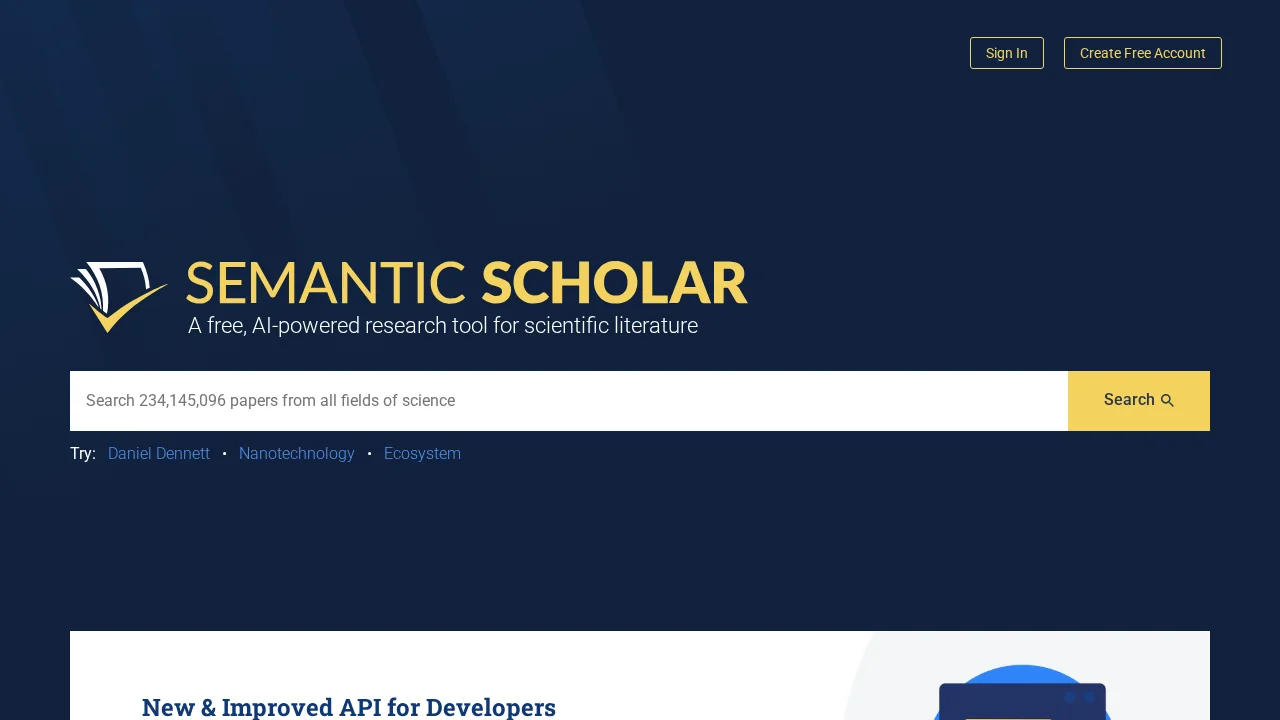
About Semantic Scholar
Semantic Scholar leverages artificial intelligence and natural language processing to help researchers navigate vast scientific literature with unprecedented precision. By understanding the semantic meaning of research content rather than relying on simple keyword matching, the platform connects scholars with the most relevant papers for their work across diverse fields including nanotechnology, medicine, physics, and social sciences.
The platform offers a comprehensive research experience through its augmented reading tools, including the Semantic Reader beta program that enhances accessibility and comprehension of scientific documents. Researchers can create personalized accounts to receive alerts about papers matching their interests, ensuring they stay informed about emerging research and new platform features without manual searches.
Developer-friendly APIs enable integration with research workflows and institutional systems, with improved documentation and stability for seamless implementation. The platform welcomes publisher contributions, expanding its coverage and ensuring researchers access authoritative, peer-reviewed content. A dedicated team of expert researchers maintains the platform's quality and continuous improvement.
Semantic Scholar was developed by the Allen Institute for AI, an organization committed to advancing research efficiency while reducing environmental impact and promoting inclusivity across the scientific community.
Pros
Cons
Alternatives to Semantic Scholar
PDFdigest
The Drive AI
CiteTrue
MyReport
Gistr
TalkToTextly
DataFlow