Six Atomic
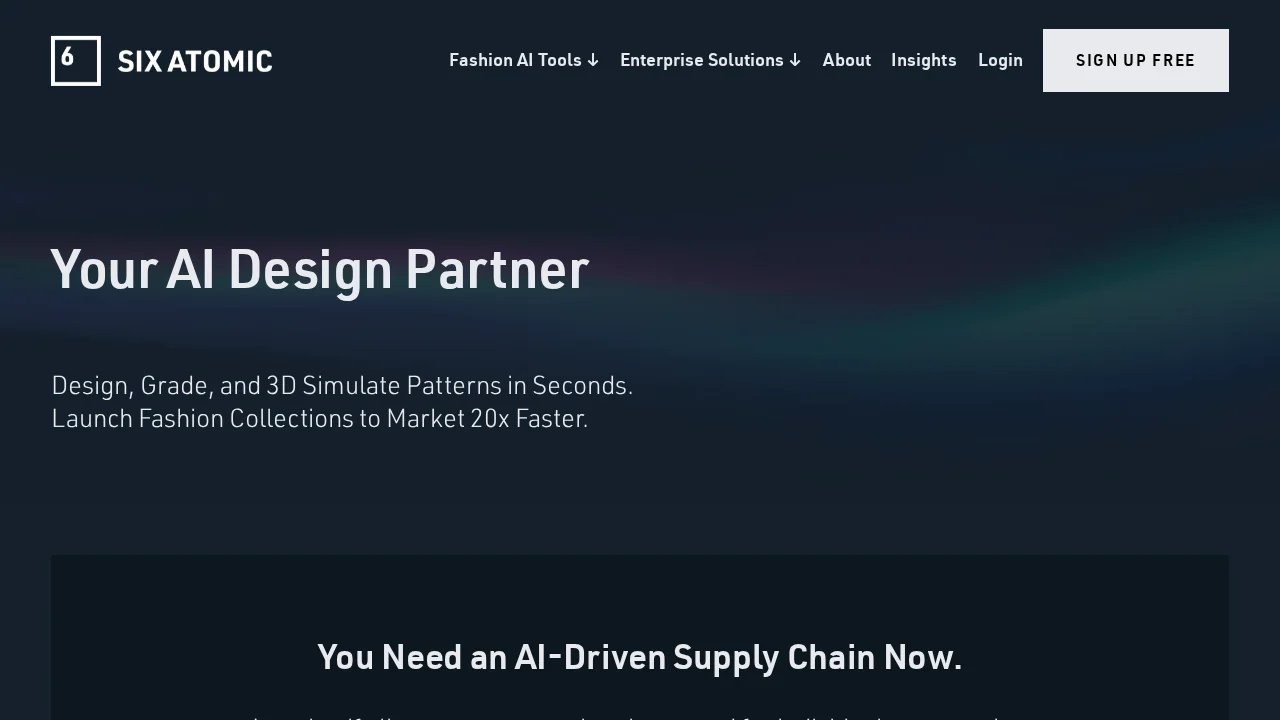
Six Atomic uses AI to accelerate apparel design, grading, and production from concept to delivery in hours.
Six Atomic at a glance
- Pricing
- Free — from Free Trial
- Key strengths
- Reduces design-to-production timeline from weeks to hours with AI automation · Enables personalized, made-to-order garments with minimal inventory risk · Accurate fit prediction through intelligent body measurement analysis
Screenshots
About Six Atomic
Six Atomic is an AI-powered platform that transforms apparel manufacturing by compressing production cycles from weeks to hours. The platform integrates advanced AI tools for real-time fashion design, automated pattern grading, and 3D pattern simulation, enabling brands to respond instantly to market demand and customer preferences. By eliminating traditional lead times, Six Atomic empowers both emerging designers and established enterprises to launch products faster while maintaining quality and precision.
The platform emphasizes personalization over mass production, allowing creators to design unique, made-to-order garments tailored to individual customers rather than broad market segments. Its Synthesis 1.0 module automates pattern grading and leverages modular design libraries, reducing design-to-production time from days to minutes. This capability makes on-demand manufacturing economically viable, enabling brands to minimize inventory risk and reduce waste while meeting customer expectations for customization.
Six Atomic's INFERENCE module functions as an intelligent body measurement predictor, ensuring garments fit perfectly without extensive returns or exchanges. The platform supports diverse business models, from independent designers to multinational brands, with scalable infrastructure and custom AI solutions for enterprise operations. By combining automation with personalization, Six Atomic addresses the apparel industry's core challenge: delivering speed, customization, and sustainability simultaneously.
Pros
Cons
Alternatives to Six Atomic
TattooCoverUp.AI
Tattoored
My Tattoo Ideas
TeeDIY
Hair Is Everything
Clos8
Tattoo AI Design