WOBO is an AI-powered job search platform that acts as a personal recruiter. It automates finding and applying to relevant positions, so you're not spending your evenings submitting the same resume and cover letter fifty times. Built by Wobo Technology in the United States, it's aimed at professionals who want a less exhausting path to interviews. There's a free entry point, no credit card required, which makes it easy to try without any real commitment.
What is WOBO?
Traditional job boards put all the legwork on the applicant. WOBO flips that: you provide your background and preferences once, and the platform continuously scans more than 50 sources — covering over 3 million jobs — to surface pre-vetted opportunities that match your profile. Every listing is verified for legitimacy before it reaches your feed, which cuts out ghost postings that eat up applicants' time. The positioning is direct: "Companies have recruiters. Now you do too."
Key features
Automated, personalized application submission
After uploading your CV and completing an onboarding conversation with WOBO's AI, the platform builds what it calls a "Digital Twin" — a model of your voice, experience, and working style. When it applies to roles on your behalf, it generates answers and cover letters grounded in your specific history rather than generic AI boilerplate. The website illustrates this with a side-by-side comparison: a generic AI response versus a WOBO-generated answer that references actual product launches, team dynamics, and personal problem-solving methods. That distinction matters. Hiring managers are getting good at spotting templated AI writing.
Match scoring and job discovery
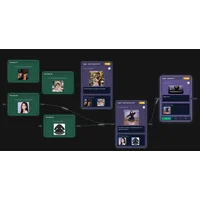
Every role WOBO surfaces comes with a similarity score — a percentage showing how closely your qualifications align with the job requirements. The swipe-style interface lets you review that score, the salary range, and company ratings before deciding to apply or pass. This helps you direct interview preparation toward roles where you're genuinely competitive, rather than blasting applications at anything available. WOBO also times submissions for when recruiters are most likely to review them, a nuance most manual applicants never think about.
Centralized application dashboard
All submitted applications are tracked inside a single dashboard, giving you a clear view of where each one sits in the pipeline. No more spreadsheets, no more losing track of follow-ups scattered across multiple job boards. WOBO centralizes progress tracking, application details, and interview scheduling notifications. The platform's stated goal: you wake up to interview invitations instead of another morning of active hunting — a workflow shift that can genuinely reduce job-search fatigue.
Free AI tools for resume and cover letter building
Beyond automated applications, WOBO offers a suite of standalone tools: an AI Resume Builder that creates ATS-friendly documents tailored to specific roles, an AI Cover Letter Generator that writes in your voice rather than from a template, and an ATS Resume Checker that scores your existing resume against real applicant tracking system criteria. These tools are free and complement the core automation workflow, making WOBO useful even if you want to stay hands-on with parts of your search. For anyone curious about how AI is reshaping productivity workflows more broadly, our beginner's guide to AI app building offers helpful context on the underlying technology trends.
Pricing and plans
WOBO is currently free, with no credit card required to get started. The website leads with "Start Free" as its primary call to action. While the core functionality is accessible without upfront cost, it's common for AI job search platforms to introduce paid tiers as they scale — higher application volumes, priority scanning, or advanced analytics tend to end up behind a paywall eventually. Check WOBO's official website for any updated plan details as the product evolves.
Pros and cons
WOBO has a solid set of advantages for job seekers who'd rather work strategically than grind through manual applications. Here's what stands out:
- Automates repetitive job applications, saving significant time and effort across the search process.
- Tailored, voice-matched applications increase the relevance of each submission and improve alignment with employer needs.
- Similarity scoring helps users prioritize the roles where they are most competitive, sharpening interview preparation.
- Centralized dashboard tracks all applications and interview progress in one place, reducing administrative overhead.
- Free AI tools for resume building and ATS checking add standalone value beyond the automation core.
There are real limitations worth weighing:
- Accurate onboarding is critical — the quality of automated applications depends entirely on how thoroughly and honestly users share their career information upfront.
- Platform integrations limit reach — application success is tied to which job platforms WOBO can access, and gaps in coverage may affect certain industries.
- Niche or specialized roles sourced through non-mainstream channels may fall outside the platform's scanning scope.
- Reduced hands-on control can feel uncomfortable for job seekers who prefer to personally craft and review every submission.
Alternatives on HyperStore
If you're exploring tools that automate complex tasks through AI agents, happycapy is worth a look. It delegates browsing, coding, and file tasks to AI agents you can watch and control in real time — a flexible approach to automating digital workflows that extends well beyond job searching.
For professionals who want to invest in their career trajectory alongside job hunting, Pathmaker offers a personalized learning platform that builds custom curricula around your goals and learning style. Pairing skill development with an active job search can strengthen your candidacy for competitive roles.
If you're building tools or workflows to support a broader hiring operation, EZClaws enables one-click deployment of private AI agents with minimal technical setup — useful for teams or solo founders who want to automate recruiting-adjacent processes without deep engineering resources.
Teams looking to streamline internal communication around hiring updates or standups might also find value in reviewing VoooAI, which lets users build complex AI workflows simply by describing them in natural language — a no-code approach that pairs well with automation-heavy hiring stacks.
Frequently asked questions
Is WOBO really free to use?
Yes, WOBO is free to start with no credit card required. Core features — job scanning, match scoring, and automated applications — are available under the free plan. As with many AI platforms, premium tiers may appear over time, so check the official site for current pricing.
How does WOBO avoid sending generic AI-sounding applications?
WOBO builds a "Digital Twin" from your uploaded CV, onboarding answers, and a chat session with its AI. This model captures your specific experiences, writing style, and professional voice. When applying to roles, WOBO generates responses grounded in your actual history rather than pulling from generic templates — which is the key differentiator the platform emphasizes most prominently.
What job sources does WOBO scan?
According to WOBO's website, the platform scans more than 50 job sources and pre-vets every listing to filter out ghost listings and unverified postings. Only legitimate, active roles from real companies should appear in your feed. The website showcases jobs from well-known companies including Netflix, Stripe, Spotify, and Airbnb as illustrative examples of the types of roles the platform surfaces.
Can I still apply manually if I want to?
WOBO prioritizes automation, but the swipe-style interface lets you review each suggested role and decline any you don't want to pursue. You retain control over which opportunities receive applications, so the platform functions more like an AI-powered assistant than a fully autonomous agent acting without your input.
Is WOBO suitable for senior or specialized professionals?
WOBO can serve professionals at various career levels, but its effectiveness for highly specialized or niche roles depends on whether those positions appear across the platforms it monitors. Senior professionals in competitive fields may benefit from the match scoring and personalized application features, though they should verify that their target companies and roles are well represented in WOBO's job feed. Supplementing WOBO with direct outreach remains a sound strategy for hard-to-find positions.
How does WOBO compare to applying through LinkedIn or Indeed directly?
Traditional platforms like LinkedIn Jobs or Indeed require applicants to search, evaluate, and submit each application manually — a time-intensive process that often produces generic submissions. WOBO automates the discovery and submission steps while personalizing each application, making it better suited for job seekers applying at volume who still want each submission to feel targeted. The tradeoff is less direct control over the application content.
WOBO makes a credible case for itself in a crowded AI career tools market by focusing on personalization rather than just speed. For job seekers tired of the copy-paste application grind, it offers a genuinely different workflow — one where your background does the work while you prepare for the interviews that follow.