Z-Image
Z-Image is an open-source AI image generator that creates photorealistic images from text prompts with efficient performance.
Screenshots
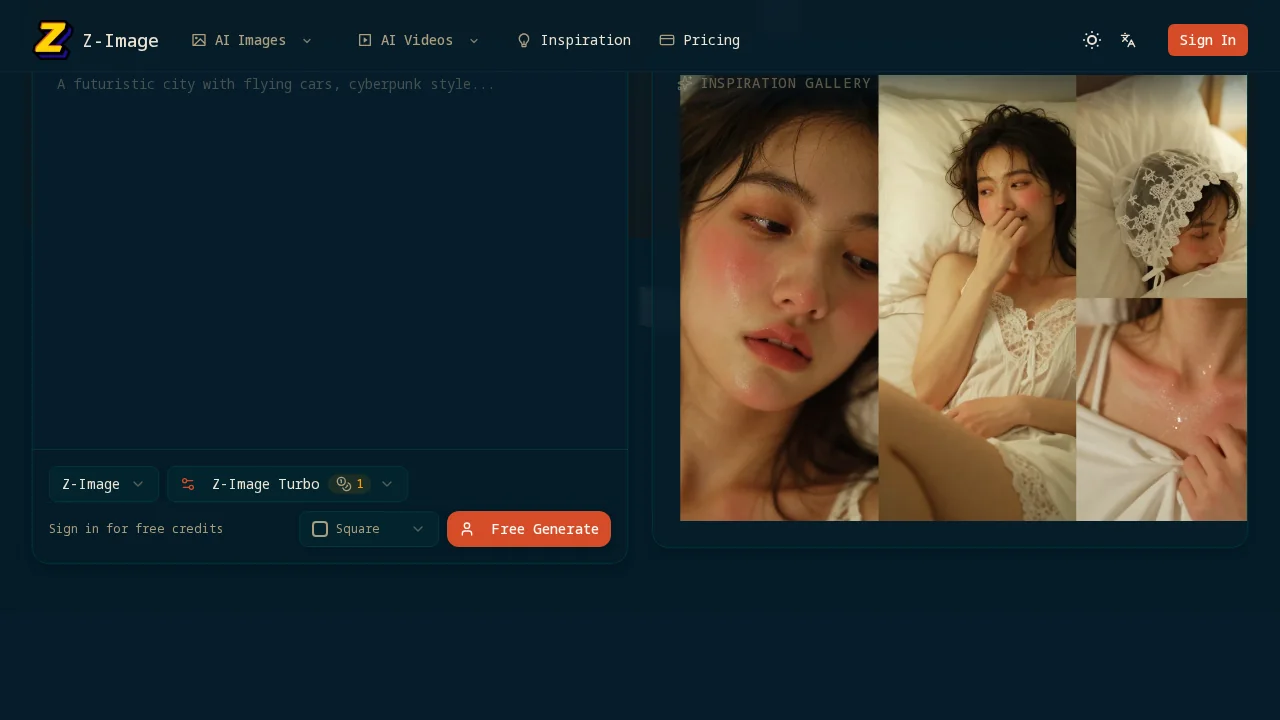
About Z-Image
Z-Image is an open-source AI image generator built for both developers and creative professionals who need high-quality photorealistic image generation without excessive computational demands. The tool employs Scalable Single-Stream DiT (S3-DiT) architecture, a unique approach that processes text and image data simultaneously to improve contextual understanding and generation accuracy. This design enables powerful results on consumer-grade hardware, requiring only 16GB VRAM to achieve professional-quality outputs.
One of Z-Image's standout capabilities is its bilingual text rendering, accurately processing prompts and in-image text in both English and Chinese. This makes it particularly valuable for global teams and creators working across language barriers. The platform offers multiple model variants including Z-Image-Base for standard generation, Z-Image-Turbo for faster processing, and Z-Image-Edit for detailed image refinement tasks. Users can install the model locally and maintain complete control over their generation pipeline.
The tool supports natural language-based image editing commands that allow users to modify generated images while preserving overall consistency and quality. Despite its advanced capabilities and professional-grade results, Z-Image remains completely free for commercial use, research projects, and community-driven modifications. This open-source approach enables developers to integrate the technology into custom workflows and applications without licensing restrictions.
Pros
Cons
Alternatives to Z-Image
SellShots
VisualGPT
Hireable Headshots
Mintshot
VibePaint.ai
GPT Caricature
AvatarStyle