
ZeroPath
ZeroPath is an AI-native SAST platform that automatically detects and fixes security vulnerabilities in application code.
ZeroPath at a glance
- Pricing
- Free — from $200/month
- Rating
- ⭐ 5.0/5 · 1 reviews
- Key strengths
- AI-powered context awareness reduces false positives significantly · One-click automated fixes accelerate vulnerability remediation · No rule configuration needed—works intelligently out of the box
Screenshots
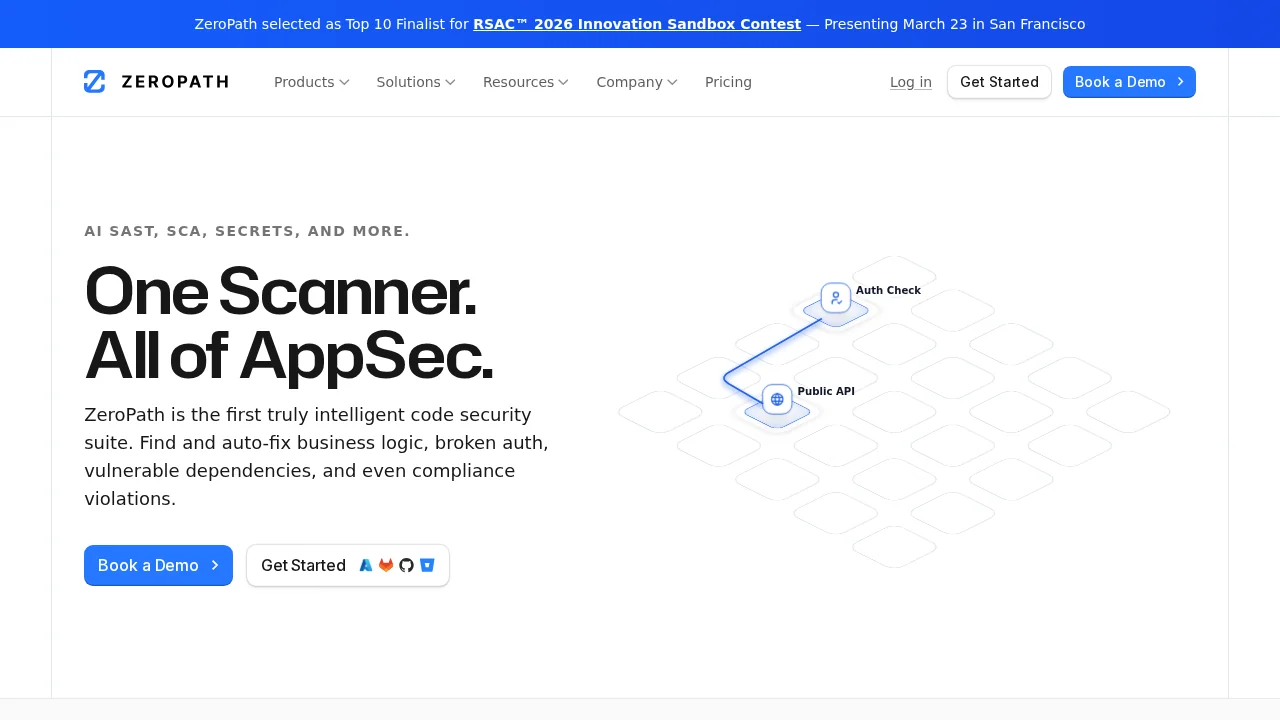
About ZeroPath
ZeroPath transforms application security by combining static application security testing with AI-driven automation. The platform scans repositories intelligently, understanding your codebase's security models, authentication patterns, and business logic without requiring manual configuration or rules setup. This contextual awareness dramatically reduces false positives, ensuring your team focuses on genuine vulnerabilities rather than noise.
Developers and security teams benefit from instant, actionable feedback directly in pull requests. ZeroPath provides clear explanations of each vulnerability alongside one-click fixes, making security remediation fast and educational. This approach shifts security from a bottleneck into an enabler, empowering developers to write secure code while maintaining development velocity.
The platform seamlessly integrates with GitHub, GitLab, Bitbucket, and Azure DevOps, fitting naturally into existing DevOps workflows. ZeroPath detects critical issues including broken authentication, compliance violations, and vulnerable dependencies, while its AI engine generates working fixes for many vulnerability types.
For organizational oversight, ZeroPath delivers executive dashboards, automated vulnerability tracking, and comprehensive compliance reporting. Security leaders gain complete visibility into their application security posture, while developers receive educational feedback that builds their security expertise over time.
Pros
Cons
Alternatives to ZeroPath
OrchestrAI
Secuarden
TheLibrarian.io
Oddsmyth
RewriteBar
ComputerX
AgentDesk