AI Tools for Workout Plans 20 apps
Back in the day, building a workout plan meant booking a trainer, flipping through fitness magazines, or stitching together routines from YouTube clips. These days, the best AI tools for workout plans can spit out a personalized program in under a minute and tweak it as your strength and recovery shift. Whether you're trying to build muscle, drop weight, or just stay consistent, AI fitness apps tend to be faster, cheaper, and often more data-driven than going the traditional coaching route.
How AI helps with workout planning
AI workout planners take a few inputs — your goals, experience level, what equipment you have access to, and your weekly schedule — and turn them into a structured training program. Most split your week into sessions, pick exercises that line up with your weak points, and prescribe sets, reps, and weights based on how you've been performing. The good ones go further, adjusting volume and intensity week to week using your logged workouts, so a plan that started generic actually becomes yours over time.
Beyond programming, a lot of AI fitness apps also handle the habits that decide whether a plan sticks: reminders, progress photos, recovery prompts, nutrition suggestions. A common pattern is pairing an AI workout generator with a tracker like a smartwatch, then letting the model recalibrate after deload weeks or missed sessions. For a broader look at how AI is reshaping fitness, the American College of Sports Medicine covers the main trends worth knowing.
What to look for
Personalization depth
The biggest difference between workout apps is how much they actually personalize. Entry-level tools take a goal and hand you a generic split. The stronger ones factor in your training history, current one-rep maxes, recovery status, and equipment access. If you've got specific goals like strength gains or hypertrophy, look for an app that asks about your training history and adjusts load progression over time, not just on day one.
Adaptation and feedback loops
A plan you follow for twelve weeks shouldn't look the same in week one as it does in week twelve. The best AI workout tools log each session, track when you miss reps or fail sets, and use that signal to adjust future workouts. Some even pull in recovery metrics like heart rate variability or sleep to scale intensity up or down. Without this loop, you're basically getting a static PDF dressed up as an app.
Exercise library and form guidance
An AI program only works if you can actually perform the movements. Look for apps with large, well-filmed exercise libraries, clear form cues, and the ability to swap exercises when your gym doesn't have a certain machine. Video demos and filterable equipment settings are what separate a planner you'll keep using from one you ditch after a week.
Integrations and ecosystem
If you already wear a smartwatch or use a calorie tracker, check whether the app plays nice with Apple Health, Google Fit, Garmin, or Whoop. Good integrations cut down on manual logging and give the AI more signal to work with. Pricing varies a lot too — some of the best tools are free with optional premium tiers, others require a subscription, so weigh cost against how much personalization you actually need.
Best AI tools for workout plans
WorkoutPro.io generates personalized fitness and meal plans using AI based on your goals, fitness level, and preferences. It's a solid general-purpose pick if you want training and nutrition handled in one place, and the free tier makes it easy to try before committing. The trade-off is depth — expect a clean starting program rather than long-term adaptive coaching.
AI-PT is an AI-powered workout generator that creates personalized routines in seconds, tailored to your goals and preferences. It leans on speed and simplicity, which makes it a good fit for beginners who want a usable plan without filling out a long questionnaire. The free access is a plus for casual users who just need a structured starting point.
FitnessAI generates personalized workout routines using AI trained on millions of workouts. That large training corpus is its main selling point, giving the app a broad base of patterns to draw from when suggesting sets, reps, and exercises. It's free to use and works well if you want variety in your programming rather than a fixed weekly template.
MikeAI is an AI fitness coach that delivers personalized workout and nutrition plans with progress tracking. It leans further into the coaching side than most tools here, mixing programming with food guidance and ongoing check-ins. The paid model suits users who want a more accountable, coach-like experience without booking in-person sessions.
Planfit is a free AI-powered fitness app that generates personalized workout plans tailored to your goals and experience level. It targets a wide audience, from beginners to intermediate lifters, and the structure adapts as you log workouts. Premium features sit behind a paid tier, but the core plan generation is accessible without paying.
EvolveAI is an AI-powered training platform that delivers personalized workout plans with expert coaching at affordable prices. It blends algorithmic planning with human oversight, which is appealing if you want AI speed but still value occasional expert input. The paid pricing reflects that hybrid model and puts it in a mid-tier spot between pure apps and personal trainers.

Faitness uses AI to generate personalized workout plans tailored to your fitness level, preferences, and available time. Time constraints are a first-class input, which makes it a strong pick for busy professionals who need sessions that fit a 30 or 45 minute window. It's a paid tool aimed at users who value flexibility over the largest possible exercise library.

Fitbod is an AI-powered personal trainer that creates adaptive workout plans based on your strength and recovery metrics. Its standout feature is how aggressively it adjusts to muscle recovery, so you rarely end up training a sore muscle group. The free tier offers a generous trial of the adaptive engine, which is one of the most mature in the category.
Flex AI is a free fitness app with over 1000 workouts and AI personalization for building muscle or losing weight. The large content library means you're unlikely to repeat routines quickly, and the AI tailors selections to your chosen goal. It's a good fit for self-directed users who want plenty of variety without paying for a subscription.
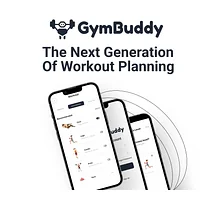
GymBuddy is an AI-powered workout planner that creates personalized exercise routines tailored to your fitness level and goals. It keeps the interface simple and focuses on fast plan generation, which works well if you want a quick routine before heading to the gym. The free access lowers the barrier for anyone trying AI planning for the first time.

PPLEGPT generates personalized AI workout routines in seconds, tailored to your fitness level and goals. It's built for immediacy: answer a few prompts and you've got a session ready to go, which is great for days when motivation is low but you still want to train. The free model keeps it accessible, though it's lighter on long-term progression tracking.
AI Meal Planner creates personalized meal plans tailored to your dietary needs, goals, and restrictions. While it focuses on nutrition rather than workouts, it pairs naturally with any of the training apps above — diet is half the equation for most fitness goals. The free access makes it a convenient add-on if you already have a workout app you like.
How to choose
Match the tool to your situation rather than chasing the longest feature list. Beginners who want a free starting point should look at AI-PT, GymBuddy, or PPLEGPT for fast, no-cost plans. Lifters who care about progressive overload and recovery should prioritize Fitbod or Planfit for their adaptive engines. If you want coaching plus programming, MikeAI and EvolveAI offer hybrid models. For pairing training with nutrition, WorkoutPro.io covers both, while AI Meal Planner slots in alongside any other workout app. Time-pressed users will appreciate Faitness's scheduling focus, and anyone who values variety should check out Flex AI or FitnessAI.
More AI tools to explore

FitnessAI
FitnessAI is an AI-powered fitness assistant that delivers personalized workout and health guidance through text-based conversations.

Freeletics
Freeletics is an AI-powered fitness platform that creates personalized high-intensity workout plans adapted to your fitness level.
Dr. Muscle
Dr. Muscle delivers AI-powered personalized workout adjustments that evolve with your fitness progress in real-time.

WorkUp
WorkUp is a free AI platform that optimizes resumes, cover letters, and interview skills to boost your job application success.
Spur.Fit
Spur.Fit is an AI personal trainer platform that helps fitness professionals scale their business and client management.

FitMate
FitMate is a privacy-first AI fitness app that creates personalized workouts without requiring signups or data collection.