


Best Nexus Seek Alternatives 6 apps
Compare the top alternatives to Nexus Seek — pricing, features, and ratings.
Nexus Seek is a research-focused AI app for helping people discover and make sense of information. Someone may explore Nexus Seek alternatives when they need a different source workflow, platform experience, integration, or price point. The options below cover concept search, document questions, market research, note capture, qualitative research, and browser-based assistance. Compare them by the job you need done, not just by the label of the tool.
Why look for a Nexus Seek alternative?
A tool can be useful for research and still leave room for a more specialized workflow. You might prefer an app that searches particular media types, answers questions only from your own documents, investigates a business question in parallel, or works directly in a browser. Pricing also matters: a free option can be easier to test, while a freemium or enterprise-oriented service may better match a team process.
Switching is not automatically an upgrade. Broader research tools may be more convenient for open-ended discovery, while focused products can be better when traceability, note capture, customer interviews, or document control is the priority. Keep Nexus Seek if it already fits your sources and habits; use the comparisons below to identify a specific gap rather than change tools for their own sake.
What to look for in a Nexus Seek alternative
Source coverage
Start with the material you actually use. Concept search across videos, podcasts, and research documents is a different need from document-only question answering, market research, or insights inside a browser. Check whether the candidate matches your source types before weighing broader AI capabilities.
Evidence and transparency
For research work, useful answers should be easy to inspect and reuse. Look for signals such as citations, timestamps, clear links back to source material, or a workflow that lets a person review the underlying evidence. If AI outputs inform important decisions, the NIST AI Risk Management Framework is a helpful reference for thinking about evaluation and oversight.
Workflow and integrations
Consider where research begins and where the result needs to go. A browser extension, structured notes and tasks, document answers, or an organized market-research process can each remove a different handoff. Prioritize the option that fits your existing habits instead of choosing solely on the novelty of an AI interface.
Privacy, security, and cost
Before moving sensitive documents, voice messages, or customer research, review how the product handles access, storage, and sharing, and confirm that its security claims match your requirements. The NIST Privacy Framework offers a useful vocabulary for evaluating privacy risk. Also check the current listing and terms: the apps here range from free to freemium, but free does not by itself answer every governance or deployment question.
The best Nexus Seek alternatives

ConceptSeek is a strong fit when the research trail spans videos, podcasts, and research documents. It finds concepts with exact timestamps and citations, so it suits readers who want source-level traceability rather than a bare summary. It is listed as free on HyperStore, making it a practical option to test alongside Nexus Seek.

DocsGPT focuses on instant answers from your documents, with an open-source approach and enterprise-grade security positioning. Choose it when your main need is a document question-and-answer workflow rather than broader discovery across different research formats. It is listed as free on HyperStore and may suit teams that value inspectable, self-directed tooling.

LuminixAI is aimed at complex business questions, breaking them into multiple parallel investigations to produce comprehensive market insights. It is a better fit when you want a more structured market-research process and have a question that benefits from several lines of inquiry, rather than a quick lookup. The HyperStore listing marks it as free, so it is worth comparing with Nexus Seek for business-oriented research.
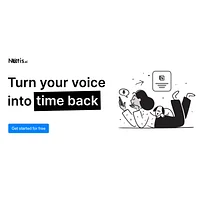
Notis takes a different route: it captures voice messages across messaging apps and auto-syncs structured notes and tasks to Notion. Choose it when the problem is turning conversations into organized follow-up, not simply finding information in a research corpus. It is listed as free on HyperStore and is especially relevant if Notion is already where your work gets managed.
Outset is built for qualitative research, automating research and uncovering customer insights at enterprise scale. It suits organizations comparing Nexus Seek with a platform focused on customer insight programs rather than individual research sessions or general information discovery. Outset is listed as freemium, so teams should compare its available free access with their expected research volume and governance needs.

SurfMind is a free AI browser extension for instant contextual insights while you research and work online. It is a natural fit when the browser is your primary research surface and you want assistance close to the page, rather than a separate destination for deeper research tasks. Compared with Nexus Seek, its appeal is the lightweight, in-context workflow; whether it is the better choice depends on how much of your work happens in a browser.
How to choose
Choose ConceptSeek when citations and timestamps across media matter; DocsGPT when your source set is primarily documents; LuminixAI for complex business questions; Notis for voice-to-Notion capture; Outset for enterprise qualitative research; and SurfMind for browser-based context. If none of those gaps applies, staying with Nexus Seek may be simpler than switching.