


Best Planable Alternatives 7 apps
Compare the top alternatives to Planable — pricing, features, and ratings.
Planable is a social media collaboration platform that helps marketing teams plan, draft, schedule, and approve posts across channels from a single visual workspace. Many teams love its clean approval workflows and content calendar, but others start searching for Planable alternatives when pricing scales up, when they need stronger AI content generation, or when their workflow is more focused on a single channel such as LinkedIn or Facebook. This guide walks through the strongest competitors on HyperStore and the situations where each one fits better than Planable itself.
Why look for a Planable alternative?
Planable does a few things very well: a polished visual calendar, multi-stage approvals, and predictable pricing for small teams. The friction tends to show up as the team grows or as priorities shift. Larger teams often find seat-based costs climb quickly once you add stakeholders, agencies, or clients who only need read-only access. Other teams feel the gap on the content creation side, since Planable is excellent at organizing drafts but does not generate the copy, visuals, or repurposed formats that modern AI tools now handle routinely. According to Sprout Social's industry research, AI-assisted content production has become a top priority for social media teams, which is pushing many to reconsider planner-only tools.
There are also workflow reasons to switch. Some brands are heavily skewed toward a single platform such as LinkedIn or Facebook, and they prefer a tool that goes deep on that one channel instead of offering broad but shallow support. Others need stronger real-time engagement features, including comment monitoring, sentiment analysis, and DM capture, that sit outside Planable's planning-and-approval core. None of these are deal-breakers for every team, but they are the most common reasons people start evaluating alternatives.
What to look for in a Planable alternative
Channel fit and depth
Planable supports the major networks in a uniform way. If your strategy leans heavily on LinkedIn, X, Reddit, or Facebook, look for tools that match that depth, with native scheduling, format previews, and engagement tooling for the specific network. A tool that goes deep on one channel will usually outperform a generalist on that channel.
Content creation, not just scheduling
Modern stacks expect AI to help draft, rewrite, caption, and repurpose. The Content Marketing Institute has documented how content teams increasingly pair planning tools with generative AI to keep up with output demands. If most of your team's time goes into ideation and writing rather than approval routing, an AI-native content platform will pay back faster than a scheduler with bolt-on AI features.
Approvals and collaboration model
Planable's approval workflow is a defining feature. If switching, confirm the alternative offers explicit multi-stage reviews, role separation between drafters, reviewers, and admins, and audit trails. Read-only stakeholder views and clear rejection reasons matter more than they look when working with clients or legal teams.
Pricing predictability
Seat-based pricing punishes growing teams. Favor tools that price by usage, by channel, or that offer generous free tiers for solo creators. Look at the cost of a typical five-person team after the first year, not just the headline monthly number.
The best Planable alternatives

GetLogit is an all-in-one AI workspace for content creation, coding assistance, and productivity, available as a free tool on HyperStore. Where Planable focuses on scheduling and approving drafts, GetLogit focuses on producing the drafts themselves, covering long-form copy, social posts, images, and voiceovers from a single prompt. It suits teams who want AI generation alongside their publishing workflow, especially when budget is tight and a paid social scheduler feels excessive. Use it when your bottleneck is writing, not approving.

HookTide is a paid AI tool aimed at LinkedIn growth. It builds content in your voice from your stated topics and audience, then helps schedule and refine posts for that one channel. Compared with Planable's broad multi-channel calendar, HookTide trades breadth for depth, offering better LinkedIn-specific formats, hooks, and tone control. It is a strong fit for founders, consultants, and personal-brand creators whose publishing strategy is essentially LinkedIn-first.
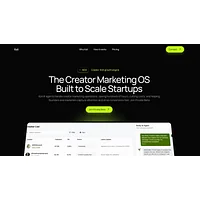
Koli automates creator outreach and campaign management, covering search, discovery, and multilingual communications for influencer and creator programs. Planable handles internal review of brand-owned content, while Koli handles the surrounding work of finding partners, pitching them, and tracking conversations across languages. Teams running structured creator or affiliate campaigns will find Koli more useful for the outreach layer, even if they keep Planable for content approval.
Notis is a free AI intern that captures voice messages from messaging apps and syncs structured notes and tasks to Notion. It is not a direct scheduling competitor to Planable, but it solves a related problem: turning unstructured spoken ideas from clients or teammates into organized content briefs. Marketing leads who capture ideas on the go and want them to land directly in a Notion content calendar will find Notis a useful complement rather than a replacement.

Pounce is a free AI social media tool that streams relevant conversations from X and Reddit into your inbox so you can engage in real time rather than miss the moment. Planable's strength is planning ahead, while Pounce's strength is reacting fast to trending threads in communities your audience reads. It suits community managers, dev-rel teams, and brands whose social ROI comes more from comment engagement than from scheduled posts.

RYPL is a free tool that automates Facebook Page management with AI replies, sentiment analysis, and smart moderation. Planable supports Facebook but treats it like any other channel, while RYPL is built specifically for the comment, DM, and moderation workload of a busy Facebook Page. If Facebook is your primary or only channel, which is common for local businesses, communities, and many consumer brands, RYPL offers a more focused workflow.

Vidocu turns videos into professional documentation, generating subtitles, voiceovers, and multilingual variants with AI. It addresses a different stage of the content pipeline than Planable: repurposing recorded video into shareable, accessible assets. Marketing teams producing webinars, tutorials, or speaker content will use Vidocu to multiply one recording into many formats, then schedule and approve the resulting posts in a tool like Planable.
How to choose
If your main pain point is cost or missing AI writing, start with GetLogit. If your strategy is LinkedIn-only, HookTide is the deeper fit. For creator and influencer outreach that surrounds your content, layer in Koli. If you live on Facebook, RYPL is purpose-built. Choose Pounce when real-time engagement matters more than scheduled posts. And if video is the core of your content engine, Vidocu extends what Planable cannot do on its own.