AUX MACHINA
AUX MACHINA transforms basic images into stunning visuals with AI-powered editing and customization in just a few clicks.
AUX MACHINA at a glance
- Pricing
- Free — from $5/month
- Rating
- ⭐ 4.0/5 · 10 reviews
- Key strengths
- Quick transformation of basic images into high-quality visuals · Full ownership of generated images with no licensing restrictions · Affordable pricing for professional-quality visual content creation
Screenshots
About AUX MACHINA
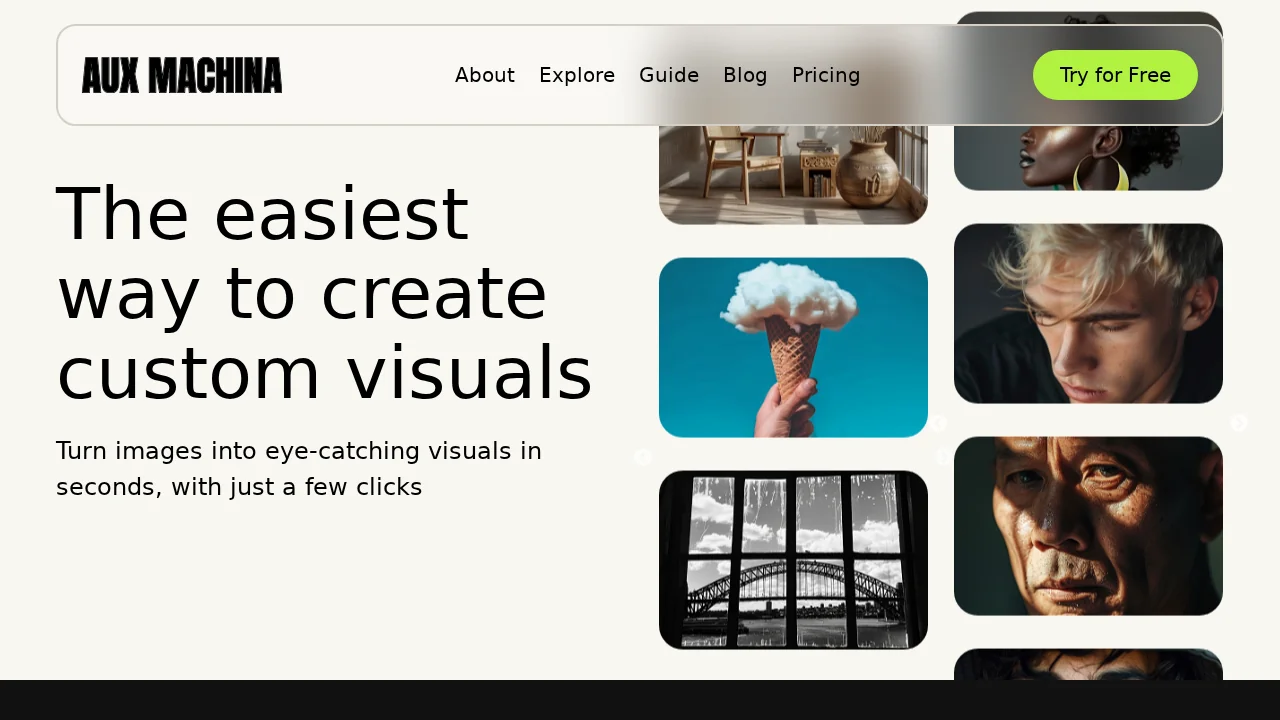
AUX MACHINA is an AI-powered visual creation platform designed to simplify image transformation and customization. Users can convert ordinary images into captivating, high-quality visuals with minimal effort, making it accessible to both creative professionals and business teams without extensive design experience. The platform handles everything from landscape creation to portrait customization, enabling rapid visual content generation.
The tool addresses a critical pain point for marketing and creative teams: producing quality imagery under tight deadlines and budget constraints. AUX MACHINA delivers cost-effective solutions without compromising on quality, allowing businesses to generate custom images tailored to their target audience and brand vision. This makes it particularly valuable for teams prototyping ad concepts, refining creative approaches, and scaling visual content production.
Ownership and licensing are streamlined with AUX MACHINA—users retain full ownership of generated images with no licensing fees or restrictions. This eliminates common concerns around image rights and permissions, making the platform suitable for commercial applications, marketing campaigns, and brand development. The intuitive interface and AI-driven capabilities ensure quick adoption across teams of varying skill levels, enabling consistent, high-quality visual output aligned with creative objectives.
Pros
Cons
Alternatives to AUX MACHINA
SellShots
VisualGPT
Hireable Headshots
Mintshot
VibePaint.ai
GPT Caricature
AvatarStyle