Apex is an AI-powered productivity assistant built to help users streamline daily work, automate routine tasks, and stay organized across tools. Like any specialized assistant, it isn't a perfect match for everyone, and many people look for alternatives that offer different strengths in automation, personal organization, or note capture. This guide compares the strongest Apex alternatives currently available on HyperStore, so you can pick the one that fits the way you actually work.
Why look for an Apex alternative?
Even when an AI productivity tool handles the basics well, the details of daily workflow matter more than any single headline feature. Some users find that Apex leans too heavily on a particular interaction style, or that its integrations don't cover the apps they rely on most. Pricing structure, platform availability, and the depth of automation can all push someone to explore what else is on the market.
Others simply need a narrower focus. If your real bottleneck is email triage and scheduling, a general-purpose assistant may feel like overkill compared to a tool built specifically for that workflow. According to research from Gartner, buyers of AI productivity software increasingly weigh integration breadth and automation depth alongside raw price, which is why specialist alternatives often win on specific jobs.
What to look for in an Apex alternative
Automation depth and reliability
The strongest productivity assistants don't just answer questions; they take real actions across your tools. Look for alternatives that handle multi-step workflows, such as drafting emails, updating calendars, or pushing data between apps, without requiring constant supervision. According to McKinsey's analysis of generative AI in the workplace, workers save the most time when automation handles the routine, repeatable steps end to end.
Integration with your existing stack
An assistant that doesn't connect to the apps you already use will quickly become shelfware. Check whether the alternative supports the messaging platforms, calendars, document tools, and CRMs that sit at the center of your day. Native integrations tend to be more reliable than bolted-on connectors, and they tend to survive product updates better.
Proactivity vs. reactivity
Some tools wait for a prompt. Others anticipate needs, surface reminders, and keep goals on track without being asked. Decide which model suits your working style: a reactive assistant is great for ad-hoc tasks, while a proactive one shines for long-running projects and personal accountability.
Pricing and access model
Free tiers, freemium limits, and subscription pricing vary widely across this category. If you're just exploring, a free option lowers the risk of switching. For teams or power users, weigh the per-seat cost against the time saved and integrations unlocked over a typical month.
The best Apex alternatives
Atomic Bot
Atomic Bot is built for hands-off execution: it runs email, scheduling, document, and web tasks around the clock through AI-powered browser control. Where Apex leans on user-driven prompts, Atomic Bot keeps working in the background, which suits people who want delegation rather than conversation. It's free to start, making it a low-risk switch for anyone whose main frustration with Apex is that they still have to drive every step manually.
Good Assistant
Good Assistant takes the opposite approach from a typical task runner: it plans, organizes, and tracks personal goals so users actually follow through. Compared to Apex, which focuses on completing discrete tasks, Good Assistant is stronger for people who struggle with consistency rather than execution. The free tier covers core planning and tracking features, which makes it appealing for solo users, students, and anyone rebuilding a stalled routine.
Notis
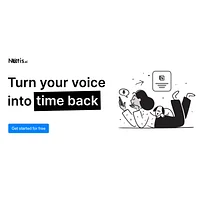
Notis is a specialist rather than a generalist: it captures voice messages across messaging apps and turns them into structured notes and tasks in Notion. Apex doesn't focus on voice capture specifically, so Notis is the better pick for anyone whose ideas and to-dos arrive through voice memos and chat threads. It's free and tightly integrated with Notion, which keeps the workflow short for existing Notion users.
How to choose
If your main complaint about Apex is that you still have to drive every action, switch to Atomic Bot for genuine background automation. If the problem is staying on top of goals and follow-through rather than getting things done, Good Assistant is a better fit. If your ideas arrive as voice messages and you're already deep in the Notion ecosystem, Notis will feel purpose-built. For most people, one tool is enough; pairing two is fine when their scopes don't overlap.
Frequently asked questions
Is there a free Apex alternative?
Yes. All three alternatives on this list offer free access: Atomic Bot, Good Assistant, and Notis. Each covers its core use case without requiring a paid tier to get started, which makes them easy to trial before any commitment.
What is the best Apex alternative overall?
There's no single winner; it depends on what you actually need. Atomic Bot is the strongest pick for background task automation, Good Assistant wins for goal tracking and personal accountability, and Notis is best for voice-to-Notion workflows.
Which Apex alternative is best for team workflows?
For teams that need shared automation across email, scheduling, and documents, Atomic Bot's browser-controlled execution scales better than tools focused on individual productivity. For team goal tracking and accountability, Good Assistant works well when each member has personal objectives to maintain.
Do these alternatives require technical setup?
No. Atomic Bot, Good Assistant, and Notis are designed for non-technical users. Notis requires an existing Notion workspace to sync into; the other two work out of the box on their free tiers.
Can I use more than one Apex alternative together?
Yes, and many users do. A common combination is Notis for capturing voice ideas into Notion, paired with Atomic Bot for executing the resulting tasks in the background without supervision.
Whichever direction you go, the goal is the same as Apex's: less time on the routine, more time on the work that matters. Try one for a week, measure the time saved, and switch again if it isn't pulling its weight.