Astrocade is an AI-powered creation platform that helps people design and build interactive games without deep coding knowledge, making it appealing to indie creators, educators, and hobbyists who want to move from idea to playable experience quickly. Because the AI game-making space is moving fast, plenty of users look for Astrocade alternatives that better match their budget, preferred output format, or creative focus, whether that means a different no-code engine, an AI music generator for game soundtracks, or tools tuned to specific genres like trivia and tabletop RPGs.
Why look for an Astrocade alternative?
Astrocade is a solid entry point for AI-assisted game creation, but it is not the only fit for every project. Some creators want a tool that leans harder into a specific niche, such as quiz games, tabletop campaigns, or generative music for game soundtracks, rather than a general-purpose engine. Others may want a different pricing model, broader platform support, or a workflow that emphasizes text prompts and conversation over a visual editor.
It is also worth comparing alternatives simply to understand what each tool does best. A platform focused on playable web games will feel different from one aimed at producing full songs, and the right pick depends on what you actually want to ship.
What to look for in an Astrocade alternative
Output type and genre fit
Different tools target different end products: playable web games, AI-composed songs, quiz apps, or tabletop RPG sessions. Match the tool to what you want to deliver, not the other way around.
Ease of use for non-coders
If you are coming to Astrocade for its no-code appeal, prioritize alternatives that keep the barrier to entry low through natural-language prompts, templates, or guided flows rather than requiring script knowledge.
Pricing and access model
Free and freemium tools let you prototype without commitment, which matters when you are still validating an idea. Check whether core features sit behind a paid tier before you commit your workflow to a platform.
Integration with the rest of your stack
Game projects rarely live in one tool. Consider whether the alternative plays nicely with assets, audio, and distribution channels you already use, especially if you plan to combine it with other AI apps in your pipeline.
The best Astrocade alternatives
AI Song Maker
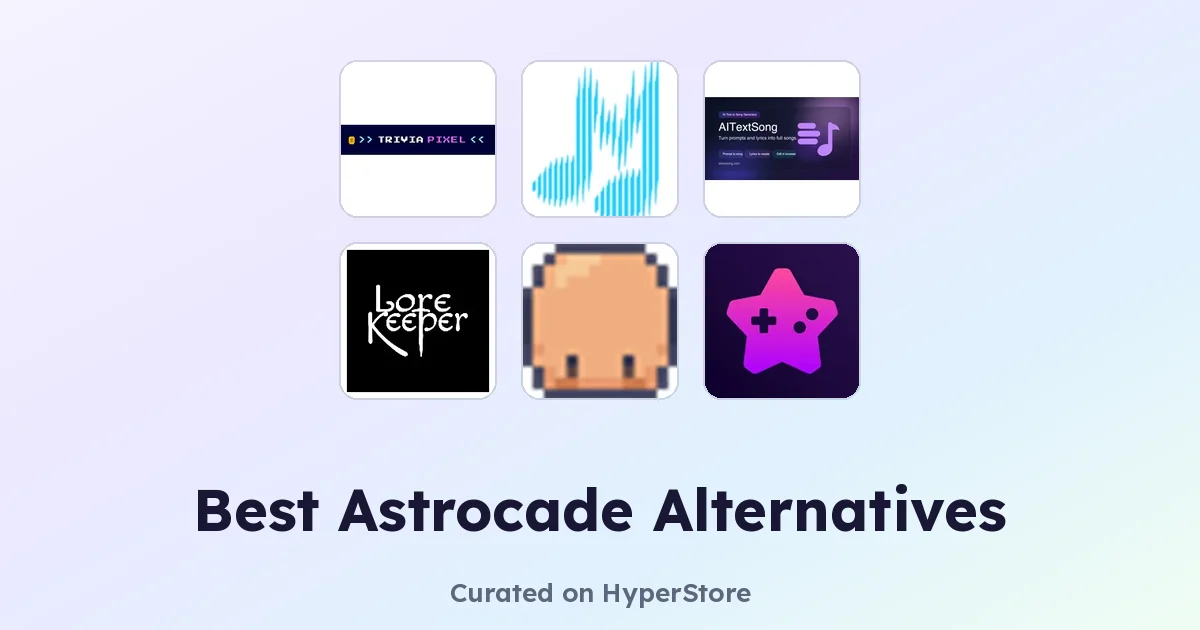
AI Song Maker turns text and lyrics into studio-quality songs across genres in seconds, making it a strong companion for Astrocade rather than a direct competitor. It suits creators who have the game side covered but need custom music, theme tracks, or background loops without licensing headaches. The freemium model means you can audition tracks before paying for higher-quality exports.
AITextSong.com
AITextSong.com focuses on the same music-from-text idea with vocals, melody, and mixing bundled into a single prompt. It is a good Astrocade alternative for users whose "game" is really an audio experience, such as jingles, podcast themes, or story-driven audio scenes. The free access model makes it especially attractive for hobbyists and quick experiments.
Chatforce
Chatforce is the closest direct alternative on this list, an AI game studio that turns ideas into playable games in minutes with no coding required. If you like the Astrocade concept but want a chat-driven workflow rather than a visual editor, Chatforce is worth a look. The free pricing also removes the friction of testing it on a side project.
LoreKeeper
LoreKeeper is built for tabletop RPGs, with an AI Game Mode that runs intelligent automation and storytelling for campaigns. It is a better Astrocade alternative than a general engine for creators whose "game" is a living world, dice, and character sheets rather than a packaged digital title. Solo players and GMs running remote sessions will get the most out of it.
TriviaPixel
TriviaPixel generates custom trivia quizzes from any topic instantly, which makes it a focused alternative for educators, marketers, and event hosts rather than general game makers. If your Astrocade project leans heavily on question-and-answer mechanics, TriviaPixel does that one job very well. It is free to try, so you can validate a quiz-based game concept before committing to a larger platform.
How to choose
If you want a direct swap for Astrocade with a chat-first workflow, start with Chatforce. If your project is really about music, pick AI Song Maker for higher-fidelity output or AITextSong.com for a free text-to-song route. For tabletop campaigns, LoreKeeper is the obvious fit, and for quiz-centric games, TriviaPixel covers the niche without the overhead of a full engine.
Frequently asked questions
Is there a free Astrocade alternative?
Yes. Chatforce, AITextSong.com, LoreKeeper, and TriviaPixel all offer free access, and AI Song Maker uses a freemium model so you can start without paying. This makes it easy to test several Astrocade alternatives before committing.
What is the best Astrocade alternative for non-coders?
Chatforce is the closest match, since it is built around turning ideas into playable games with no code required. For non-code creators whose output is music, AITextSong.com and AI Song Maker are equally approachable.
Which Astrocade alternative is best for tabletop RPGs?
LoreKeeper is designed specifically for tabletop RPGs, with AI Game Master features that handle storytelling and automation. It is a stronger fit than a general game engine for campaign-style play.
Can I use these tools to make money from my games?
Commercial use depends on each platform's terms of service, not just the tool itself. Review the licensing on whichever alternative you choose, and check the latest guidance from resources like the Game Developer community on monetizing AI-assisted projects.
Are AI game tools replacing traditional engines like Unity or Godot?
Not yet. AI tools like the ones here excel at prototyping, casual games, and creative experiments, while engines such as Godot still lead for complex commercial releases. Many creators use both side by side.
Each of these Astrocade alternatives covers a slightly different slice of the AI creation space, so the best choice depends on whether your priority is gameplay, music, tabletop storytelling, or trivia. Try two or three with a small project and let the workflow, not the feature list, guide your final pick.