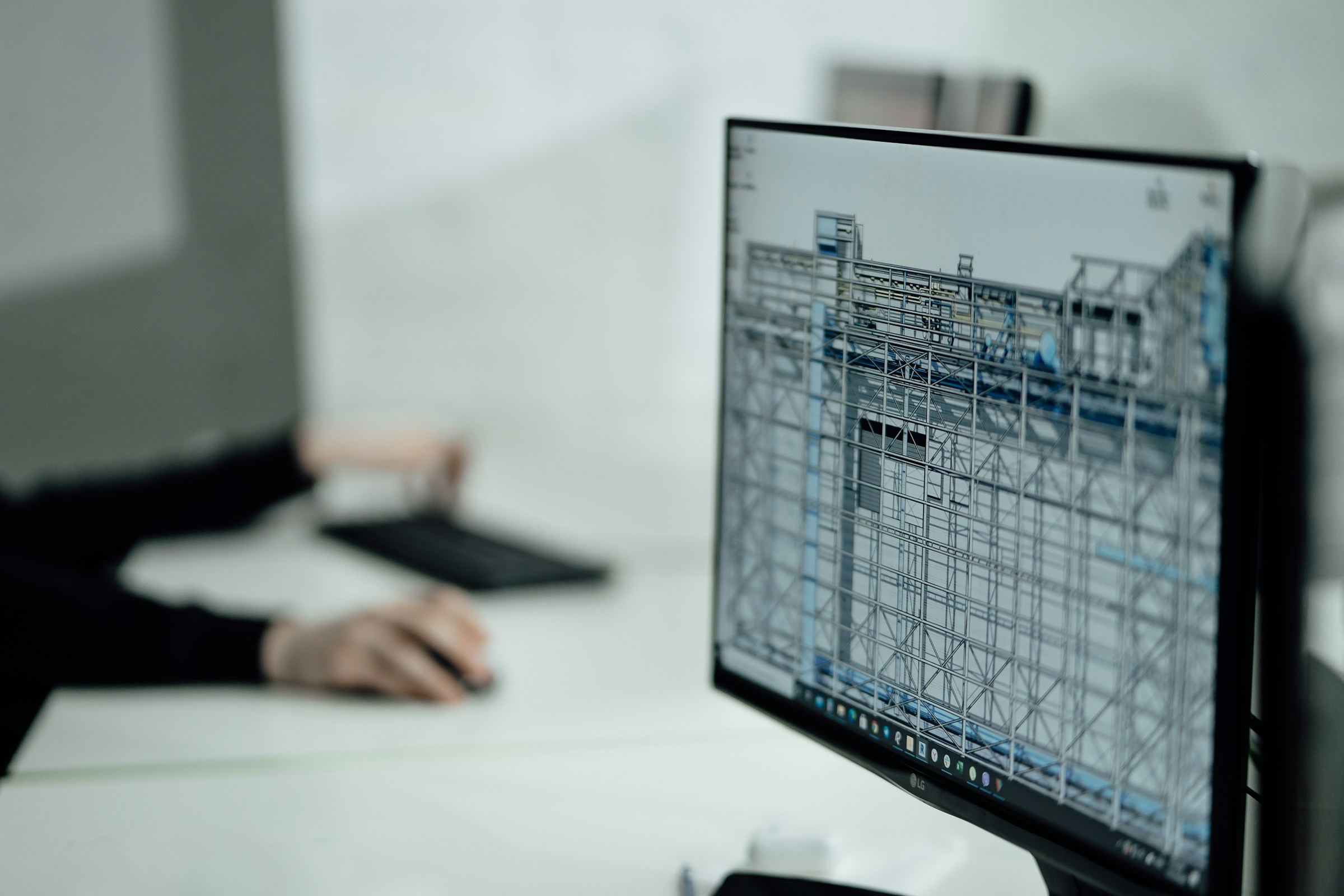
The best AI tools for architects in 2026 are no longer novelty plugins — they are core to how competitive firms move from napkin sketch to construction document. This guide walks you through the workflows that matter most: concept rendering, BIM coordination, floor plan generation, site feasibility analysis, and project management. For each stage, you'll find the tools worth your time, how they actually integrate into practice, and what to watch out for. Whether you run a solo studio or a 200-person AEC firm, the stack you build this year will define your output for the next five.
AI-Powered Concept Rendering and Visualization
Early-stage design used to mean weeks of hand-drawn studies or expensive 3-D modeling time before a client ever saw a compelling image. Generative image models have collapsed that timeline to hours, sometimes minutes. The shift is not just cosmetic — faster visual iteration means architects can test more ideas before committing to a direction, which consistently produces stronger schemes.
Midjourney and Adobe Firefly for Mood and Massing
Midjourney V7 accepts reference images and style weights, so you can feed it a site photo and a precedent study and receive photorealistic massing options that respect both constraints. Adobe Firefly's Generative Fill, deeply embedded in Photoshop, lets you paint over an existing rendering and regenerate specific materials or sky conditions without rebuilding the whole scene. The practical workflow: sketch in SketchUp, export a viewport, bring it into Firefly, and iterate on façade treatments in real time during a client meeting. It is remarkably persuasive.
Stable Diffusion with ControlNet for Precision Control
Where Midjourney favors painterly quality, Stable Diffusion with a ControlNet adapter gives you structural control over output geometry. Feed it a line-weight elevation and it will stay true to your proportions while exploring material and lighting variations. The original ControlNet paper demonstrated this conditioning approach across architectural line drawings specifically — the technique has matured considerably since then. For firms that need client-ready images without a full visualization team, this combination is the most cost-effective path available.
Veras by Evolve Lab
Veras lives inside Revit and SketchUp as a native plugin, which matters enormously for production firms. It reads your actual model geometry and generates photorealistic renderings from it rather than from a disconnected prompt. Changes to the model propagate to new renders automatically. The integration removes the hand-off friction that has historically made AI visualization a research exercise rather than a production tool.
BIM Integration and AI-Assisted Documentation
Building Information Modeling is where architecture meets engineering coordination, cost estimating, and construction sequencing. AI is entering this space at two levels: intelligent clash detection and automated documentation generation. Both address the parts of BIM work that eat associate hours without producing design value.
Autodesk AI Features in Revit and Construction Cloud
Autodesk has embedded generative and predictive AI across its platform — Revit's AI-assisted sheet naming, Construction Cloud's predictive schedule risk scoring, and Forma's urban analysis engine are the three worth knowing in 2026. Autodesk Research's published work on AI in AEC provides the technical grounding for these features. Forma in particular uses machine learning trained on thousands of built projects to predict daylight, wind, and noise exposure at the massing stage — before you've committed to a structural grid.
Hypar for Generative BIM Workflows
Hypar is a cloud-based workflow engine where architects write or assemble functions that generate building elements parametrically. The platform now includes AI functions that accept natural-language inputs — describe a core-and-shell floor plate configuration and it outputs IFC-compatible geometry. For repetitive building types like multifamily residential or office fit-outs, Hypar can compress a three-week documentation sprint into a single afternoon. The learning curve is real, but firms that invest in it report dramatic reductions in coordination RFIs during construction.
Speckle for AI-Augmented Data Coordination
Speckle is an open-source data platform that treats BIM objects as queryable data rather than locked files. Teams pipe models from Revit, Rhino, and Grasshopper into a shared stream, then run Python or JavaScript automations — increasingly AI-powered ones — against that data. A script that checks every door for ADA clearance, flags violations, and emails the responsible discipline lead takes about 20 minutes to build. That kind of automated QA used to require a dedicated BIM manager running manual audits.
AI Floor Plan Generation and Space Planning
Generative floor plan tools have matured from academic demos into production-ready products. The best ones accept a building program — room counts, adjacency requirements, gross area targets — and output multiple layout options ranked by efficiency metrics. Architects then edit and refine rather than originate from a blank canvas.
Finch3D for Residential and Mixed-Use Layouts
Finch3D integrates with Revit and outputs Revit-native geometry, not just images. Input your site boundary, floor-to-floor height, and unit mix, and it generates dozens of layout options with calculated net-to-gross ratios and daylight scores. For multifamily developers running feasibility on multiple sites simultaneously, this compresses weeks of schematic design into a single day. The tool does not replace the architect's judgment about livability and character — it eliminates the mechanical layout work so that judgment can be applied more often.
TestFit for Developer-Focused Feasibility
TestFit is purpose-built for real estate developers and the architects who support them. It handles parking podium optimization, unit count maximization, and proforma integration in real time. Change the parking ratio and the unit count updates instantly. Most architecture firms doing developer work have already encountered it on the client side; bringing it in-house gives you more negotiating leverage in schematic design conversations.
DALL-E and Custom GPTs for Program Diagrams
Custom GPT assistants trained on your firm's project typologies can generate program diagrams, bubble diagrams, and adjacency matrices from a written brief. This is less glamorous than rendered imagery but often more immediately useful — a project manager who can ask an AI to produce a weighted adjacency matrix from the client's functional brief and get a usable diagram in 30 seconds is genuinely faster. Pair this with tools like Anara, which parses and organizes multi-format documents, to automate the extraction of program requirements from lengthy client briefs.
Site Feasibility and Environmental Analysis
Site analysis has traditionally required licensed software, specialist consultants, and significant lead time. AI is dismantling all three barriers. Environmental simulation that once took days of compute time and a dedicated energy modeler now runs in the browser during a design meeting.
Cove.tool for Energy and Carbon Modeling
Cove.tool connects early-design geometry to energy code compliance and embodied carbon calculations simultaneously. The AI recommendations engine suggests envelope changes — insulation values, glazing ratios, shading depths — ranked by carbon reduction per dollar of construction cost. For firms pursuing LEED, WELL, or local green building standards, this replaces the back-and-forth with an energy consultant on early massing decisions. It integrates with Revit, SketchUp, and Rhino.
Delve by Google and Urban-Scale AI
Delve applies generative design to master planning — it evaluates thousands of site layout permutations against solar access, shadow impact, view corridors, and financial returns. It was developed within Google's Sidewalk Labs and is now widely used by urban design practices and large-scale residential developers. The outputs feed directly into stakeholder presentations, which is where the time savings compound: you arrive at a community meeting with 12 analyzed options rather than two half-baked ones.
Geospatial AI with Natix Network
For site analysis that depends on real-world, real-time conditions rather than static GIS datasets, Natix Network offers a decentralized geospatial mapping platform combining IoT, AI, and blockchain. It is particularly relevant for urban infill projects where pedestrian flow, traffic patterns, and neighborhood change data inform programming decisions. Pulling live urban data into early feasibility analysis is increasingly standard practice at the leading firms — static survey data is simply too stale for fast-moving development markets.
AI for Architecture Project Management
Project management is where architecture firms quietly hemorrhage profitability. Scope creep, undocumented verbal changes, and misread schedules are systemic, not accidental. AI project management tools address these problems at the process level rather than the symptom level.
Monograph for Fee Tracking and Phase Budgeting
Monograph is built specifically for architecture firms — it understands phases, consultants, and hourly billing structures in a way that generic project management software does not. Its AI layer forecasts fee burn rate, flags phases trending over budget, and models the financial impact of scope changes before you agree to them. Principals who use it report that it shifted conversations with clients from reactive to proactive: you see the problem three weeks before it becomes a crisis.
Procore and AI-Driven Construction Administration
During construction administration, AI tools embedded in Procore analyze RFI patterns to predict which design areas are generating the most field questions — useful for calibrating where to invest documentation effort on the next similar project. The platform also uses machine learning to flag submittal packages likely to be rejected based on completeness checks, reducing the review cycle. For large firms managing dozens of active projects, this kind of signal-from-noise capability is where AI earns its keep most visibly.
AI Meeting Assistants for Design Coordination
Transcription and action-item extraction tools have become standard in the most efficient AEC firms. An AI meeting assistant that attends every OAC meeting, generates minutes, and pushes action items to Procore or Asana eliminates a significant administrative burden from project architects. The accuracy of modern transcription across technical vocabulary — "curtain wall mullion," "CMU backup," "TPO roofing assembly" — has improved to the point where the output requires editing, not reconstruction. Platforms that support multi-language transcription are especially valuable for international project teams, similar to how AI tools for supply chain management have adopted real-time translation workflows to coordinate across global operations.
Building a Coherent AI Stack for Your Firm
The firms extracting the most value from AI in 2026 are not using every tool on this list — they have selected three to five that align with their project typology and invested in proper onboarding. A residential firm focused on custom homes has very different leverage points than a 50-person urban design practice. The selection logic should follow your fee structure: where do hours go that produce the least design value? That is where AI intervention has the highest ROI.
Integration Over Novelty
Chasing every new model release is a distraction. The question is not which tool produced the best image in a Twitter thread — it is which tool plugs into your existing software without requiring a parallel data management system. Prioritize tools with native Revit, Rhino, or BIM 360 integrations over standalone applications that require manual file export. Data continuity across the project lifecycle is worth more than any individual feature.
Team Adoption Is the Real Variable
AI tools fail in practice not because the technology is weak but because adoption strategies are weak. Designate a tool champion for each product — someone who builds proficiency and creates firm-specific workflows and templates. Firms that treat AI adoption the way they treat software licensing, which is to say as an IT procurement event rather than a practice transformation, consistently underperform those that invest in internal expertise. The analogy holds across industries: the nonprofit sector's most effective AI adopters similarly succeeded by pairing tools with trained internal advocates rather than expecting autonomous results.
Architecture is a discipline built on the synthesis of constraints — program, site, budget, structure, culture. AI tools accelerate the mechanical work that surrounds that synthesis, which means the architects who master them will have more time for the parts of the job that actually require an architect. That is the frame worth holding as you build your 2026 stack: AI as leverage, not replacement.