Social media managers plan, create, and distribute content across Instagram, TikTok, LinkedIn, X, Facebook, and whatever new platform just launched last week. They're often juggling multiple brand accounts at once, turning marketing calendars into on-brand posts, replying to communities, pulling performance reports, and increasingly running the paid campaigns that sit next to organic work. AI matters here because it compresses the production loop. Drafting copy, generating visuals, scheduling posts, and pulling insights that used to take days can now happen inside a single working session.
Why social media managers use AI
The core pain point is volume. One team might ship dozens of posts a week across several accounts, each in a slightly different voice and format, while also testing creative variants for paid. AI helps by generating first drafts of captions, breaking long-form content into platform-native snippets, and producing on-brand imagery without waiting on a design queue. On the analytics side, it can summarize weekly performance, flag what's over- or under-performing, and suggest what to test next.
Beyond speed, AI lets social media managers protect their attention. Pulling metrics into a report, reformatting a blog quote for LinkedIn, or drafting ten headline variants for an A/B test — that's the kind of work that crowds out strategy. Handing those loops to an assistant frees up time for the parts of the job only a human can do: setting brand voice, building community, reading cultural signals.
What to look for
Multi-platform support
Social media managers rarely live on a single network. A useful tool should publish to or generate for the platforms you actually use (Instagram, TikTok, LinkedIn, X, Facebook, YouTube Shorts, Pinterest) and respect each one's format, character limits, and quirks. A tool that only drafts for Twitter won't cut it. One that exports finished assets per platform saves hours each week.
Brand voice and approval controls
Generations only matter if they sound like your brand. Look for tone controls, style guides, approved content libraries, and ideally a draft-first workflow so a human can review before anything goes live. For paid campaigns, that draft-then-approve step matters even more, since the wrong tone in an ad is costly and hard to walk back.
Scheduling and calendar integration
Creation without distribution is a half-finished job. The best tools either include a scheduler or play nicely with one, so drafts move cleanly into a content calendar with a publish date, time, and platform attached. Calendar visibility also makes it easier to spot gaps, overlaps, and conflicts with campaigns.
Analytics and iteration loops
AI is most valuable when it closes the loop. Tools that surface performance data, suggest what to repost or boost, and let you iterate on creative based on real numbers compound their value over time. According to HubSpot's State of Marketing report, marketers who use AI for content and analytics report higher productivity and better campaign outcomes than those who don't.
Best AI tools for social media managers
Munch Studio
Munch Studio generates on-brand social posts across multiple platforms in minutes, which makes it a strong fit for managers running several accounts at once. Its multi-platform output cuts down the manual reformatting step that usually eats into a content day. The freemium tier is handy for testing the workflow before committing budget.
AdKit Meta Ads MCP Server
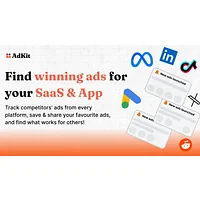
AdKit Meta Ads MCP Server is built for managers who also run paid on Facebook and Instagram. It connects to AI agents and adds a draft-first approval flow, so campaign changes get drafted, reviewed, and then pushed live rather than executed on the spot. The API-based, paid model suits teams that want programmatic control without losing the human guardrail.
Creaitor
Creaitor plans, generates, and optimizes on-brand content with a focus on SEO and AI visibility alongside social distribution. For social media managers whose brief includes ranking in search and being cited by AI assistants, this dual angle is appealing. It offers a freemium tier and API access, which works for both solo managers and integrated marketing stacks.
Layers
Layers automates content creation, ads, and social distribution specifically for app growth, which suits social media managers embedded in mobile or SaaS teams. Its paid plan bundles organic and paid workflows into one place, reducing the tool sprawl that often comes with running growth campaigns. If your social calendar is tied to product launches and app installs, this one's worth a look.
Pallyy
Pallyy is a scheduling-first platform that lets creators and managers handle every major social network from a single dashboard. For social media managers whose bottleneck is distribution rather than creation, a clean unified calendar is often the highest-leverage upgrade. The freemium entry point makes it easy to trial without a procurement process.
Socap.ai
Socap.ai helps founders and investors strategically manage connections and find relevant introductions, with an AI layer over networking. It's not a posting tool, but it fits social media managers whose role includes creator, partner, and influencer relations. Figuring out who to reach out to, and why, is a recurring task this kind of platform streamlines.
Stockimg AI
Stockimg AI generates logos, stock photos, videos, and social media content from one design surface, which comes in handy when you need fresh visual assets on a tight cadence. It skips the round-trip through a stock library for many common asks. Freemium and API access make it flexible for both one-off design needs and embedded pipelines.
Superflows
Superflows adds an AI assistant into a SaaS product, but the underlying capability (controlled AI answering complex queries) translates well to internal social media tools, like a custom assistant that pulls from your content library. Its freemium, open-source, and API-friendly posture suits teams that want to build rather than buy a finished app. For social media managers at product companies, it's a useful building block.
Superhuman
Superhuman combines fast email, writing assistance, collaborative docs, and a proactive AI agent, which covers the inbox-heavy side of social media management. PR pitches, partnership asks, and community DMs all funnel through email, and a faster inbox directly buys back time for creative work. It's a paid product with API access, aimed at professionals who treat email as a core workflow.
The AI CMO
The AI CMO standardizes campaigns and enforces brand consistency at scale, which matters once a social media manager is responsible for multiple brands or sub-brands. Acting as a system of guardrails around AI-generated content, it reduces the risk of off-brand posts slipping through. The free tier is a low-risk way to test whether the approach fits your team.
Tinker
Tinker is a free AI creative suite from Shopify that generates videos, images, 3D models, and more on iOS and Android. For social media managers producing video-first content for TikTok, Reels, and Shorts, a mobile-first creative tool fits the actual workflow of shooting and editing on the go. The free price point and mobile availability make it easy to keep on a content creator's phone.
Averi AI
Averi AI is a content engine focused on helping startups publish content that ranks on Google and attracts customers, which complements the social side of a manager's role. Many social media managers also own the blog or landing pages that social posts point back to. A free tool that supports that downstream content can be a strong complement to your social stack.
How to choose
If your main bottleneck is producing posts across many accounts, start with Munch Studio or Pallyy and add Stockimg AI for visuals. If paid campaigns on Meta eat a big chunk of your week, AdKit Meta Ads MCP Server gives you a safer approval-driven workflow. For multi-brand teams worried about consistency, The AI CMO acts as guardrails, while Tinker and Averi AI are good free add-ons for video and supporting content respectively.
Frequently asked questions
What is the best AI tool for social media managers overall?
There's no single winner, but Munch Studio and Pallyy are strong defaults because they cover the two ends of the workflow: content generation and scheduling. The right pick depends on whether creation or distribution is your current bottleneck.
Are there free AI tools for social media managers?
Yes. Tinker and Averi AI are free, and Pallyy, Munch Studio, and Stockimg AI all offer freemium tiers that cover typical starter use cases.
Can AI replace a social media manager?
AI is a strong assistant for drafting, scheduling, and reporting, but it doesn't set brand voice, read culture, or manage community. According to McKinsey's State of AI research, AI tends to augment rather than replace creative and strategic roles, and social media management is a clear example of that pattern.
Which AI tool is best for managing paid social ads?
For Meta campaigns specifically, AdKit Meta Ads MCP Server is built around the workflow, with a draft-first approval model that suits teams that need human oversight on every change.
How do I keep AI-generated content on-brand?
Use tools that expose tone controls, style guides, or approval workflows. The AI CMO is purpose-built for brand consistency, and most other tools on this list include some form of review step before publishing.
Whichever tools you pick, the most useful pattern is to chain them: a creation tool feeding into a scheduler, with an analytics layer closing the loop. Start with the single biggest pain point in your week, add a tool that solves it well, and expand from there. The best AI tools for social media managers are the ones that disappear into the workflow and leave you more time for the work only you can do.