The strongest jenni alternatives on HyperStore each solve a different weakness users find in the original. Jenni is an AI writing assistant built primarily for academic and research writing, helping students and researchers draft essays, literature reviews, and citations faster. Many writers turn to alternatives once pricing tiers, citation limits, or the strong academic framing stop matching how they actually work. The alternatives below now span open-source research assistants, browser-based insight tools, and platforms aimed at enterprise-scale qualitative work.
Why look for a Jenni alternative?
Jenni shines when you need help shaping long academic arguments and producing citations, but it isn't a perfect fit for every workflow. The free tier caps the number of AI-generated words per month, which can run out quickly during intensive dissertation or thesis writing. Several users also find the interface tightly bound to long-form text, with little support for non-academic formats like briefs, marketing copy, or voice-driven note capture. Pricing, research depth, and platform openness are the three reasons people typically look elsewhere.
It is worth noting that Jenni remains a strong choice for its core use case. Anyone writing thesis chapters or journal submissions in English, with a budget for a mid-range subscription, will likely be happy staying put. The case for switching only really applies when a different tool does one specific job better, whether that is free research across video and audio sources, or enterprise-grade qualitative analysis at scale.
What to look for in a Jenni alternative
Source coverage and citation transparency
Academic workflows live and die by traceability. The strongest alternatives surface exact timestamps, page references, or clearly named documents for every claim they generate. Look for tools that show their work in a way you can hand to a supervisor or peer reviewer without re-checking it yourself.
Openness and pricing model
Jenni uses a freemium tier with monthly word caps, which is a dealbreaker for some heavy users. Open-source projects built around document assistants let you self-host for free, while freemium research tools often rely on fair-use query limits instead of word caps. Picking the right model depends on whether you value flexibility over polish.
Content format and input variety
Jenni is text-in, text-out. Alternatives now accept voice memos, browser pages, PDFs, and even hours of video or podcast audio. If your research inputs aren't written essays, a tool that handles those natively will save hours of manual prep work.
Privacy and data ownership
Academic work often contains unpublished data and sensitive intellectual property. Worth checking is whether a tool is open-source, runs locally, or has enterprise-grade security certifications like those catalogued in NIST's Computer Security Resource Center. Especially relevant when your institution requires it.
The best Jenni alternatives
ConceptSeek
ConceptSeek targets researchers who work as much with audio and video as with text. It scans lectures, podcasts, and research documents and returns specific concepts with exact timestamps and citations, which makes it a strong fit when your sources are recorded rather than written. Compared with Jenni's text-first approach, ConceptSeek is the better pick for media-heavy literature reviews and interdisciplinary work where citations must point to a precise moment in a recording.
DocsGPT
DocsGPT is an open-source AI assistant that answers questions from your own document library, prioritizing data privacy for users who want full control. Its enterprise-grade security stack makes it a natural choice for researchers handling confidential drafts, sensitive intellectual property, or unpublished data. Versus Jenni, DocsGPT trades polished academic templates for true self-hosting and full data ownership, which many labs and universities now require.
LuminixAI
LuminixAI frames itself as a research agent that decomposes a complex business question into parallel investigations and synthesizes comprehensive market insights. Where Jenni helps you draft, LuminixAI helps you scope. It is best suited to consultants, analysts, and strategy teams doing competitive landscape work rather than essay writing.
Nexus Seek
Nexus Seek uses AI agents to produce end-to-end research reports on any topic in minutes, handling source gathering, drafting, and structure. It is the closest analogue to a report-on-demand tool in this list. Stack it against Jenni when you need a fast first draft of a market scan or competitive briefing, rather than paragraph-by-paragraph help with a thesis chapter.
Notis
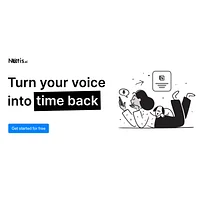
Notis captures voice messages across messaging apps and synchronizes structured notes and tasks into Notion, effectively acting as an AI intern. It targets a totally different workflow than Jenni, centered on spoken and chat-based thinking rather than long academic drafting. The pick here is for product, ops, or research leads whose raw material lives in voice memos and chat threads, not Word documents.
Outset
Outset is an AI-powered research platform built for qualitative research at enterprise scale, automating interview synthesis and surfacing customer insights from large corpora. It is overkill for solo academic writing but well-suited to product, UX, and insights teams. Relative to Jenni, Outset operates one layer up: you feed it transcripts and it returns themes, patterns, and quotes you can actually cite in a stakeholder deck.
SurfMind
SurfMind is a free browser extension that delivers contextual insights as you read or search the web, fitting naturally into the way researchers already browse. It does not write essays for you, the way Jenni does, but it tightens the upstream half of research: skimming sources and pulling out the relevant threads. Useful as a complement to longer-form tools.
How to choose
If you are a student or academic still happy with text-first drafting and just want more breathing room on a budget, DocsGPT or a free research tool like ConceptSeek or Nexus Seek is the most direct swap. If your raw material is mostly audio and video, ConceptSeek will save the most time. For strategy, product, or market-research work that has outgrown academic framing, LuminixAI, Nexus Seek, and Outset sit in the right neighborhood. Notis is the natural pick when thinking happens out loud in messages and calls, and SurfMind slots in cleanly for anyone who wants help at the browsing stage rather than the drafting stage.
Frequently asked questions
Is there a free Jenni alternative?
Yes. DocsGPT is fully open-source and self-hostable, while ConceptSeek, LuminixAI, Nexus Seek, Notis, and SurfMind all sit on free tiers. Outset is the one entry on this list that is freemium, with paid enterprise plans for larger teams.
What is the best Jenni alternative for academic writing?
For pure academic drafting, DocsGPT keeps citations and sources close, while ConceptSeek adds value if much of your literature is video or audio. Students writing a thesis in English will still find Jenni's academic templates hard to beat, so a free complement such as SurfMind may be a smarter add than a full switch. For a broader look at academic writing conventions, the overview on Wikipedia is a useful starting point.
Which Jenni alternative is best for research reports?
Nexus Seek and LuminixAI are both designed to produce end-to-end research reports and lean toward business and market questions. Outset is the better fit when the report is built on qualitative interviews rather than market data.
Is there a Jenni alternative that works in the browser?
SurfMind is a free browser extension that surfaces contextual insights while you read and search. It complements Jenni-style drafting well, handling the discovery part of the workflow rather than the writing itself.
What's a good Jenni alternative for capturing ideas on the go?
Notis captures voice memos from messaging apps and routes structured notes and tasks into Notion. It is the right tool when your best thinking happens in calls and chats, not at a desk.
Each of these tools handles a different slice of the research and writing workflow that Jenni touches. Picking the right one depends less on finding a single replacement and more on identifying where your current setup actually slows you down, then closing that specific gap.