Mumble Note: AI Voice Notetaker turns spoken thoughts into searchable text, capturing voice memos, meetings, and brainstorms without the friction of typing. It is popular with solo thinkers, students, and busy professionals who think out loud and want clean transcripts later. Still, people shop around when pricing shifts, integrations miss the mark, or they need a tool that does more with the transcript than store it. This guide compares the strongest alternatives on HyperStore and the situations where each one pulls ahead.
Why look for a Mumble Note: AI Voice Notetaker alternative?
Most users land on a voice notetaker because typing feels slow. The trade-off is that transcription accuracy, language support, and what the tool does with the transcript afterward matter more than the capture step itself. Some users hit paywalls once free minutes run out, while others find that voice-only capture ignores the web pages and text they want bundled alongside it.
Others switch because their workflow lives somewhere specific. A founder might want notes pushed straight into Notion, a researcher might want a single hub for articles and recordings, and a writer might want help turning the transcript into something publishable. There is also a privacy angle. Voice files can contain sensitive material, so where a tool stores and trains on that audio is a real concern. A fair look at alternatives should weigh accuracy, integration, and what happens after the recording stops.
What to look for in a Mumble Note: AI Voice Notetaker alternative
Transcription quality and language coverage
Speaker labels, accent handling, and language support decide whether the transcript is usable or a mess to clean up. Tools that publish independent accuracy benchmarks, or rely on established engines, tend to be more dependable than those that do not disclose what powers them. If you record in multiple languages, confirm coverage up front rather than after the trial.
What happens after the capture
The capture is only half the job. Some tools stop at a transcript, others summarize, extract action items, or draft follow-ups. According to McKinsey's State of AI report, the productivity gains from generative tools come from downstream synthesis, not just transcription. Pick a tool that handles the step you actually struggle with.
Where your notes end up
Native integrations with Notion, Obsidian, Google Docs, or Slack often matter more than the recording UI itself. A tool that lives in your existing workspace removes the daily friction of copy-paste and keeps recordings tied to projects.
Pricing transparency
Free tiers are useful but often capped by minutes, uploads, or seats. A tool that publishes its limits clearly, and does not gate core features behind a yearly plan, is easier to commit to. Watch for tools that bundle transcription with unrelated features you do not need.
The best Mumble Note: AI Voice Notetaker alternatives
Cleve
Cleve is an AI-powered workspace built to turn rough ideas into polished content, which puts it on the other side of the workflow from Mumble Note. Where Mumble Note excels at capturing speech, Cleve helps you do something with what you have captured, from drafts and summaries to structured documents. It suits writers, marketers, and founders who already record thoughts elsewhere and want help shaping them into usable output. The free tier makes it a low-risk complement to a voice notetaker rather than a direct swap.
Gistr
Gistr is an AI smart notebook that pulls web content into one organized, searchable place, so it competes more on the research and reading side than on live capture. Compared with Mumble Note, it is the better fit for users who mix voice notes with articles, PDFs, and links and want a single search surface. It works well for analysts, students, and product teams who save more than they record. Pair it with a voice capture tool when you need both inputs handled cleanly.
Notis
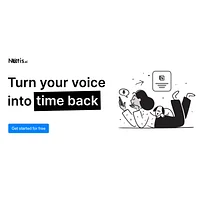
Notis is the closest functional cousin in this list. It acts as an AI intern that captures voice messages from messaging apps and pushes structured notes and tasks into Notion automatically. If your main frustration with Mumble Note is friction between voice capture and your existing Notion workspace, Notis is built for that exact handoff. It fits remote teams and solo operators who already live inside messaging apps. The trade-off is that it is messaging-first, so it is less useful for in-person meetings or long-form dictation.
How to choose
If you want to keep voice capture simple and improve how you write up the results, start with Cleve. If your bottleneck is organizing articles and recordings together, Gistr is the better hub. If you are drowning in voice messages on WhatsApp or Telegram and need them turned into Notion tasks, Notis is the obvious fit. None of these is a perfect Mumble Note replacement for every user, but each solves a specific pain point that brings most shoppers to the alternatives page in the first place.
Frequently asked questions
Is there a free Mumble Note: AI Voice Notetaker alternative?
Yes. All three alternatives covered here have free tiers, though limits vary by tool and use case. Cleve and Gistr are free to start, and Notis is also free, with the main cost being the time you invest in setting up the Notion sync.
What is the best Mumble Note: AI Voice Notetaker alternative?
For pure voice-to-Notion workflows, Notis is the strongest match. For research-heavy users who want one search surface across voice and web, Gistr is a better fit. For writers who need help turning transcripts into finished content, Cleve is the strongest choice.
Which alternative has the best transcription accuracy?
Independent benchmarks from sources like Artificial Analysis suggest that Whisper-based engines lead on multilingual accuracy, but real-world performance depends on accent, background noise, and language. Test with your own voice before committing to a paid plan.
Can these alternatives handle long recordings?
Most modern AI notetakers handle meetings of an hour or more, but free tiers often cap recording length or monthly minutes. Check the published limits on each tool's page before relying on it for daily use.
Do any of these alternatives work offline?
Voice transcription is generally cloud-based because the models are too large to run well on-device. If offline capture matters to you, look for tools that record locally and sync transcripts when you reconnect.
The right alternative depends on what you do after the recording stops. Voice capture is a largely solved problem in most categories now. The differentiator is what happens to the transcript next. Try the tool that matches the weakest link in your current workflow rather than chasing a perfect all-in-one.