Notis vs Prismix comes up when founders and marketing teams look for AI tools that reduce busywork. The two products, though, address very different needs. Notis is a voice-first productivity assistant that captures ideas through WhatsApp, iMessage, Telegram, Slack, or email, then sends structured notes and tasks to Notion. Prismix is an AI-powered social media management platform for generating, scheduling, and publishing brand-aligned content across multiple channels from one dashboard. Notis is aimed at busy founders and professionals who want to remove the friction from note-taking and task delegation. Prismix is built for marketers, small businesses, and content teams that need automated content calendars and analytics without switching between several tools.
At a glance
The main difference is scope and intent. Notis sits inside messaging apps you already use and turns unstructured voice and text into organized Notion content. Prismix is a standalone social media command center focused on content creation, scheduling, and competitive intelligence at the brand level.
What each tool does
Notis
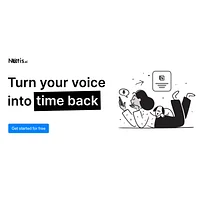
Notis presents itself as an "AI intern" that works inside the messaging apps you open throughout the day. Send a voice note, forward an email, or type a message, and Notis transcribes, organizes, and sends the result to your Notion workspace automatically. It supports WhatsApp, iMessage, Telegram, Slack, and email, so there’s no separate app to install. The tool goes beyond note-taking: it can draft blog posts, update CRM records, create calendar events, file bug reports, log expenses from receipt photos, and manage meeting follow-ups, all from a single voice message. According to its website, more than 17,000 founders trust the tool. It connects to over 1,000 third-party apps, including Gmail, Google Calendar, Linear, GitHub, Dropbox, and Outlook, with 1,400-plus integrations available without additional configuration. Recurring automation, including scheduled tasks, cron-based reminders, and webhook triggers, lets Notis keep working when you’re not actively messaging it.
Prismix
Prismix is built around the social media content lifecycle. Its headline feature generates a complete 30-day content calendar in one click, a process it says cuts hours of planning down to seconds. The platform adapts posts for each social network while preserving the brand’s voice, and its AI selects peak posting times to support engagement. An analytics dashboard brings performance data from connected accounts into one place, including engagement, growth, and content reach. Prismix also provides real-time competitor analysis and trending-content tracking, giving teams a way to spot market shifts before they become mainstream. A built-in media library stores high-performing content and resurfaces it for reuse, while customizable brand templates help keep campaigns visually consistent. A 7-day free trial is available, and no credit card is required.
Feature comparison
Content creation and input methods
Notis accepts voice messages, forwarded emails, photos, plain text, and Slack mentions. It turns these unstructured inputs into formatted notes, tasks, and drafts. The goal is to capture whatever’s in your head or inbox, in whatever form it takes. Prismix uses a more structured workflow: you provide brand context and goals, and the AI produces ready-to-publish social posts and captions optimized for each platform. Neither approach is inherently better. Notis is stronger at freeform capture, while Prismix is designed for polished, on-brand output on public channels.
Scheduling and automation
Prismix is built for scheduling. AI-selected posting times, one-click publishing across platforms, and automated content distribution are part of its core workflow. Notis also supports automation through recurring cron schedules, one-time timed tasks, and webhook-triggered workflows, but these are general-purpose automations rather than social-specific scheduling. If you need a reliable social posting cadence, Prismix’s scheduling layer is more mature and targeted. For broader task automation across different types of work, Notis reaches further.
Analytics and competitive intelligence
Prismix includes a dedicated analytics dashboard with engagement metrics, growth tracking, and competitor strategy analysis, plus industry-standard social media analytics capabilities such as trending hashtag tracking. Notis doesn’t offer analytics in that sense; its value is operational rather than analytical. Teams that need to report on content performance or benchmark themselves against competitors will get more from Prismix’s intelligence layer.
Integrations and ecosystem
Notis has a wide integration footprint: 1,000-plus managed app connections and 1,400-plus zero-configuration integrations. It covers tools such as Notion, Gmail, Google Calendar, GitHub, Linear, Slack, Dropbox, and Outlook. It also supports MCP server extensions and CLI tools for power users. Prismix’s integration details, including which social networks it supports and whether it connects to third-party tools, aren’t publicly documented in detail. Teams with complex tech stacks should confirm Prismix’s platform support before committing. Based on the available information, Notis has the clearer advantage in third-party connectivity.
Pricing
Both Notis and Prismix are listed with a free pricing model in the HyperStore directory. Notis’s website doesn’t publicly itemize paid tiers, so its free entry point may include usage limits or follow a freemium structure. That’s worth confirming with the team. Prismix offers a 7-day free trial with no credit card required and has a Pricing page on its website, although specific plan costs aren’t disclosed in the publicly available excerpts. At scale, Social media management tools of this type often charge per seat or per platform, so the paid tiers for both products may follow that pattern. Visit each app’s site to confirm current pricing before making a decision.
Pros and cons
Notis
- Pro: Works inside WhatsApp, iMessage, Telegram, Slack, and email, so there’s no new app to learn
- Pro: Broad integration footprint (1,000+ apps) covering tasks, CRM, calendar, and more
- Pro: Handles notes, task management, blog drafts, expense logging, and CRM updates from a single voice message
- Pro: Automation features (cron and webhooks) let it work in the background without active prompting
- Pro: According to its website, it’s trusted by 17,000+ founders
- Con: Requires an existing Notion workspace; teams using other knowledge bases may not get the full benefit
- Con: Audio quality affects transcription accuracy
- Con: Initial setup and formatting preferences need tuning before outputs are consistently on point
- Con: Not designed for social media scheduling or brand analytics
Prismix
- Pro: One-click 30-day content calendar generation cuts down planning time
- Pro: Per-platform post optimization helps maintain the brand voice across channels
- Pro: Real-time competitor analysis and trend tracking are built in
- Pro: A unified dashboard for all social accounts eliminates platform switching
- Pro: A 7-day free trial with no credit card required makes evaluation easier
- Con: Supported social networks and third-party integrations aren’t clearly documented publicly
- Con: Pricing is opaque; plan details aren’t available without signing up
- Con: Brand voice alignment may require an initial setup and calibration period
- Con: It has no productivity or task management features outside the social media context
Which should you pick?
Choose Notis if your main problem is capturing ideas and delegating tasks while you’re on the go. It fits founders, solo operators, and small teams who work in messaging apps, use Notion as their knowledge base, and want a hands-free way to turn voice and text into structured, actionable content across many tools. Its range, from meeting notes and CRM updates to expense logging, makes it an all-in-one productivity layer rather than a single-purpose tool.
Choose Prismix if consistent, high-quality social media output at scale is the priority. Marketing teams, agency professionals, and growing brands that need active posting schedules, competitor tracking, and performance reporting will find Prismix’s purpose-built features more closely aligned with their daily work than Notis’s general-purpose automation.
The two tools can also coexist. A founder could use Notis to capture social media ideas by voice and delegate posts, while a marketing team member uses Prismix to plan, schedule, and analyze those campaigns. For teams large enough to need both layers, the products are complementary rather than direct competitors.
Other alternatives on HyperStore
If neither tool fits, a few other options in the directory are worth a look. ThinkInPublic turns rough notes and ChatGPT conversations into polished, SEO-friendly blog posts, making it a strong option when the goal is written publishing rather than social media. FlowRank is an AI content engine that generates research-backed articles daily to drive organic traffic, so it suits content marketing teams focused on SEO instead of social scheduling. Teams that want to check whether AI-generated content passes authenticity checks before publishing can use OmniDetect, which runs content through multiple AI detection engines and provides a trusted consensus result.
Frequently asked questions
Is Notis better than Prismix for social media content?
Prismix is the better fit for dedicated social media management. It includes features built for the job, such as per-platform post optimization, AI scheduling, and competitor analysis. Notis can generate social captions and draft posts from voice notes, but it doesn’t provide a content calendar, scheduling, or social analytics. Prismix provides all three.
Is Prismix better than Notis for personal productivity?
Yes, if by “productivity” you mean managing your own tasks, notes, and communications. Notis is the clear specialist here. Prismix focuses on brand-level social media operations and doesn’t provide tools for personal task management, note-taking, or cross-app automation.
Do Notis and Prismix integrate with each other?
There’s no documented direct integration between the two tools. Notis connects to over 1,000 apps, so it may be possible to build a workflow that bridges both through a middleware tool. That isn’t a supported out-of-the-box feature for either platform.
What platforms does Notis work on?
Notis operates through WhatsApp, iMessage, Telegram, Slack, and email. It doesn’t require a separate app installation and syncs outputs to Notion. It also connects to Gmail, Google Calendar, GitHub, Linear, Dropbox, Outlook, and 1,000-plus additional apps.
How do I try Prismix before paying?
Prismix offers a 7-day free trial with no credit card required, and you can sign up directly on its website. Specific paid plan pricing isn’t publicly listed, so the trial is the clearest way to evaluate costs and feature limits before committing.
Notis and Prismix both apply AI to specific workflow problems: Notis focuses on personal productivity, while Prismix focuses on social media management. The right choice depends on where your biggest bottleneck is. Review each app’s listing on HyperStore, use the available free options, and match the tool to the job you need done.