Speechify Voice AI is a voice generation and listening platform known for turning text into natural-sounding audio across devices. Many users adopt it for productivity, accessibility, and on-the-go reading. But reasons to explore Speechify Voice AI alternatives are common: pricing tiers that escalate with usage, narrow language or voice variety, and the fact that "voice AI" spans several very different jobs — call automation, transcription, music production, and personal notetaking each have specialists that do them better.
Why look for a Speechify Voice AI alternative?
Speechify is strongest as a text-to-speech reading companion, so users whose needs extend into live conversations, telephony, audio editing, or dictation often hit limits. Some teams want conversational AI agents that can handle real phone calls with customers, not just narrated articles. Creators may need stem separation, voice cloning, or background music generation, which sit outside Speechify's core. Professionals who dictate constantly — lawyers, clinicians, consultants — frequently want tighter integrations with email, Slack, or CRM tools, and lower per-minute costs at high volume.
Others switch simply because they want a free tier that matches what Speechify gates behind a paid plan, or because their workflow is desktop-heavy rather than mobile-first. None of this makes Speechify a bad product; it just means the "best" tool depends on what kind of voice work you're actually doing.
What to look for in a Speechify Voice AI alternative
Match the voice job, not the brand
Voice AI now splits into at least four distinct categories: inbound/outbound call agents, speech-to-text transcription, audio production (voice generation, cloning, stems), and personal notetaking. Identify which one matches your task before comparing features, because a strong TTS reader and a strong call-center agent rarely overlap in capabilities or pricing.
Output quality and language coverage
Look at voice naturalness, latency for real-time use, and the breadth of languages and accents. According to Gartner's research on conversational AI, perceived quality and response time are the two biggest drivers of user satisfaction in voice products.
Integrations and workflow fit
Check whether the tool plugs into the apps you already use — telephony providers, Slack, email, DAWs, or CRM. A voice tool that lives in isolation creates more friction than it removes.
Pricing transparency at your volume
Per-minute, per-character, or per-call pricing can swing dramatically once you scale. Compare the real cost at your expected usage, not the entry-level sticker price.
The best Speechify Voice AI alternatives
CloudTalk | AI Voice Agents
CloudTalk AI Voice Agents is built for live phone conversations rather than text reading, automating inbound and outbound calls with conversational AI for lead qualification and support. Unlike Speechify, which focuses on narrated playback, CloudTalk handles real-time dialog with customers over telephony. It suits sales and support teams that want to route, qualify, or resolve calls without expanding headcount, and offers a free entry point to test the platform.
Contextli
Contextli is an AI speech-to-text tool that converts spoken dictation into formatted text ready for email, Slack, and professional workflows. Where Speechify turns text into audio, Contextli does the reverse — capturing voice and shaping it into structured written output. It's a strong fit for professionals who dictate more than they read aloud, and the free tier makes it easy to evaluate alongside paid transcription services.
Coolo.ai
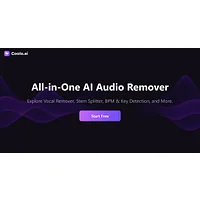
Coolo.ai is an AI-powered audio tool suite focused on vocal removal, stem splitting, and music analysis — a completely different lane from Speechify's text-to-speech reading. It's aimed at musicians, podcasters, and video editors who need to isolate or rework audio tracks. Anyone exploring voice AI for creative production rather than listening will find Coolo.ai more directly useful than a reading-focused app.
FineVoice
FineVoice is an AI voice generator that creates high-quality, royalty-free voices alongside sound effects and music production tools. It competes more directly with Speechify on the generation side, but extends into voice cloning and audio asset creation that Speechify doesn't emphasize. Content creators producing podcasts, videos, or branded audio at scale may prefer FineVoice's broader creative toolkit, and a free tier is available to trial.
Mumble Note: AI Voice Notetaker
Mumble Note is an AI voice notetaker that captures scattered spoken thoughts and turns them into organized, actionable notes instantly. Speechify reads to you; Mumble Note listens to you and writes things down. It's well suited to thinkers, writers, and busy professionals who brain-dump verbally and need structure afterward. The free tier lowers the barrier for anyone wanting to test AI notetaking against their existing workflow.
How to choose
If you need to automate or scale live phone calls, start with CloudTalk AI Voice Agents. If dictation into text is the priority, Contextli is the closest fit. For music and audio production work, Coolo.ai or FineVoice cover creative needs Speechify doesn't address. And if you think out loud more than you read, Mumble Note is purpose-built for that. Speechify remains a solid choice for pure text-to-speech reading; the alternatives simply expand the definition of what "voice AI" can do.
Frequently asked questions
Is there a free Speechify Voice AI alternative?
Yes. Several alternatives on HyperStore — including CloudTalk AI Voice Agents, Contextli, Coolo.ai, FineVoice, and Mumble Note — offer free tiers or free entry plans, letting you test core features before committing to a paid subscription.
What is the best Speechify Voice AI alternative?
It depends on the use case. For live call automation, CloudTalk AI Voice Agents leads. For speech-to-text, Contextli. For audio production, FineVoice or Coolo.ai. For voice-driven note capture, Mumble Note.
Which alternative is closest to Speechify's core feature?
FineVoice overlaps most with Speechify on the voice generation side, though it leans more toward creative production than reading long-form content aloud.
Can these alternatives handle multiple languages?
Most modern AI voice tools support a range of languages and accents, but coverage varies. Check each product's language list against your target audience before committing, especially for production or customer-facing deployments.
Do I need different tools for different voice tasks?
Often, yes. A single app rarely excels at both generating narration and handling live calls, or both editing music stems and capturing personal notes. Many users end up combining two or three specialized tools rather than one generalist.
Browse all five alternatives on HyperStore, compare their free tiers side by side, and pick the one that matches the specific voice task you do most.