Tonemark is an AI-powered writing assistant built to help users draft, refine, and polish text across a range of content types. Like any specialized tool, it fits some workflows better than others, which is why many writers, marketers, and operators start searching for Tonemark alternatives. Whether the goal is lower cost, a more focused feature set, or stronger integration with a specific publishing platform, the marketplace now offers mature options worth comparing side by side.
Why look for a Tonemark alternative?
The most common reasons people move away from Tonemark are practical rather than dramatic. Pricing is one trigger: when monthly usage scales up, the per-document or per-seat cost of a general AI writer can outpace more specialized tools that bundle features into a single flat tier. Feature gaps are another. A user whose real output is a weekly newsletter, a long-form book, or a WordPress blog may find that a generalist assistant lacks the templates, export formats, or publishing integrations they actually need.
Platform coverage also matters. Tonemark lives in its own interface, which is fine for some, but writers who work inside Gmail, a CMS, or a browser text field may prefer tools that meet them where they already write. Workflow fit, output control, and tone consistency round out the typical reasons teams begin a comparison in the first place.
What to look for in a Tonemark alternative
Output format and content type
Match the tool to the artifact you actually produce. Newsletters, blog posts, books, and internal documents each have different length, structure, and export requirements. A tool that excels at short marketing copy may stumble on a 60,000-word manuscript, and vice versa. According to Gartner's strategic technology trends research, specialization in generative AI tooling has been a defining pattern across the market, so picking a tool aligned with your primary output format pays off quickly.
Pricing and free-tier access
Compare not only the sticker price but the unit economics: cost per document, cost per seat, and whether a free tier covers your baseline volume. Several alternatives on HyperStore are listed as free, while others use paid plans. Make sure the price matches the volume and quality you actually need rather than what a vendor assumes is typical.
Platform and integration
Where does the tool live? Browser extensions sit alongside your existing apps, WordPress plugins embed AI directly in your CMS, and standalone platforms bring their own editor. The right answer depends on how much context-switching your team can tolerate and which destinations your finished content actually lands in.
AI quality and tone control
Look for clear controls over tone, length, audience, and format. The best assistants let you guide voice with prompts or templates rather than forcing you to rewrite outputs from scratch. This is especially important when the writing carries a brand voice that must stay consistent across many pieces.
The best Tonemark alternatives
AI Newsletter Generator
AI Newsletter Generator is purpose-built for one of the most repetitive writing tasks: turning news and trends into a polished email. Where Tonemark handles general content drafting, this tool focuses on curation, structure, and ready-to-send newsletter design. It suits marketers, content teams, and community managers who publish recurring emails and want a faster path from source material to inbox. It is listed as a paid tool, which is reasonable given the specialized templates and design work it automates.
Clico
Clico takes a different approach by living directly inside your browser as an extension. Instead of opening a separate editor like Tonemark, you summon AI assistance inside any text box: emails, forms, docs, social posts. That makes it a strong fit for users who write across many surfaces in a typical day and want tone and grammar help without leaving the page. It is listed as free, which makes it an easy add-on to test alongside a primary writing tool.
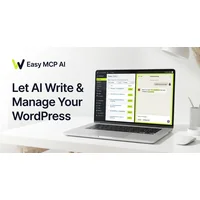
Easy MCP AI for Wordpress
Easy MCP AI for WordPress is the right pick when the destination for your content is a WordPress site. It connects your site to AI assistants so content can be optimized and managed autonomously, rather than copy-pasted from a standalone app like Tonemark. For bloggers, SEO teams, and agencies running WordPress at scale, this integration-first approach removes a meaningful chunk of manual work. It is listed as free.
Librida
Librida targets long-form book creation, turning ideas into structured drafts of novels with intelligent writing assistance. Where Tonemark is a generalist writer, Librida is opinionated about chapters, narrative arcs, and book-length output. It is the strongest alternative on this list for fiction authors, memoirists, and self-publishers who need guidance beyond a single article or email. It is listed as free.
ShakespeareAI
ShakespeareAI generates professional books and documents and offers multi-format export, which addresses one of the common frustrations with general AI writers: getting output out in the format you actually need. Like Tonemark, it covers a broad content range, but it leans toward longer documents and structured deliverables. It is a sensible choice for consultants, researchers, and writers who need polished documents in DOCX, PDF, or similar formats. It is listed as free.
Skywork
Skywork positions itself as an AI workspace agent for productivity, automating paperwork and task management alongside writing. Tonemark is content-focused; Skywork is workflow-focused, treating writing as one piece of a broader productivity picture. It is a good match for operators, analysts, and teams that want their AI tool to also handle scheduling, summaries, and structured tasks, not just text generation. It is listed as free.
How to choose
If you publish recurring newsletters, start with AI Newsletter Generator. If you write across many apps and want in-place help, choose Clico. If WordPress is your publishing hub, Easy MCP AI for WordPress will save the most time. For book-length work, Librida or ShakespeareAI are both strong fits, with Librida leaning fiction and ShakespeareAI leaning structured documents. If you need AI to handle writing plus broader task management, Skywork is the broadest pick. Tonemark itself remains a sensible general-purpose choice, especially if your output type is varied and a single specialist tool feels limiting.
Frequently asked questions
Is there a free Tonemark alternative?
Yes. Most of the alternatives on this list, including Clico, Easy MCP AI for WordPress, Librida, ShakespeareAI, and Skywork, are listed as free on HyperStore. The one exception here is AI Newsletter Generator, which is listed as paid because of its specialized templates and design automation.
What is the best Tonemark alternative?
There is no single winner; it depends on your output type. For newsletters, AI Newsletter Generator is the strongest. For long-form books, Librida is hard to beat. For WordPress publishing, Easy MCP AI for WordPress is the obvious choice. For in-the-moment writing across apps, Clico fits best.
Can these alternatives handle long-form content like Tonemark?
Librida and ShakespeareAI are explicitly designed for long-form output, including books and structured documents. The other tools lean toward shorter formats like emails, posts, and tasks. If you regularly produce very long documents, start your comparison with those two.
Do these tools require technical setup?
Most are accessible to non-technical users. Clico installs as a browser extension, and Skywork and ShakespeareAI work from a standard web interface. Easy MCP AI for WordPress is the one that benefits from a working WordPress environment, since it is built to connect directly to a site.
How should I evaluate quality before switching?
Run the same prompt or brief through two or three finalists on a real piece of work, then compare the output against your usual Tonemark result. Independent research like McKinsey's State of AI report consistently emphasizes that hands-on pilots outperform vendor benchmarks when selecting generative AI tools.
Tonemark is a capable generalist, and the alternatives above each address a specific gap: specialization, platform, format, or workflow. Pick the tool that matches the artifact you produce most often, and keep an eye on how pricing scales as your usage grows.