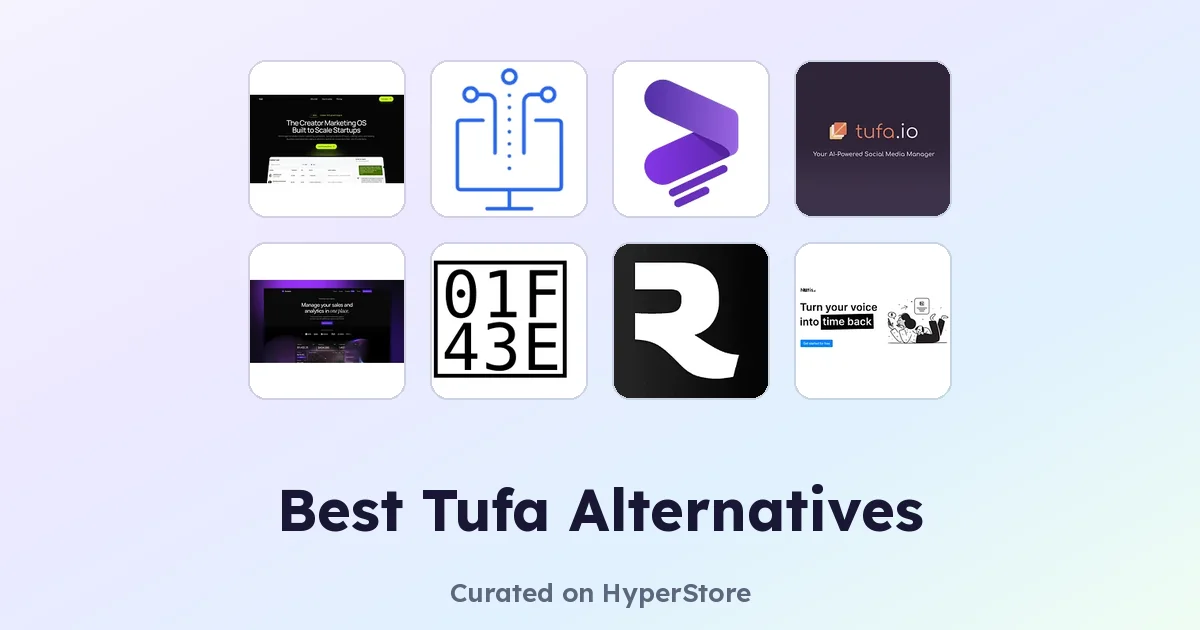
Tufa is one of many AI-powered tools built to streamline everyday productivity, content creation, or automation tasks that once demanded multiple subscriptions and hours of manual work. Users typically look for Tufa alternatives when pricing shifts, when a specific feature feels missing, or when a more specialized tool better matches a particular workflow such as LinkedIn growth, video documentation, or social listening.
Why look for a Tufa alternative?
Even a strong AI tool can fall short for some users. Common reasons for shopping around include price increases, limits on usage tiers, or a desire for a tool focused tightly on one job like video-to-docs or LinkedIn ghostwriting rather than a broad platform. Some users also outgrow a tool's feature set and need deeper integrations, multilingual support, or analytics that the current pick doesn't expose.
Switching can also be motivated by platform fit: a creator-heavy team may want one app, while a solo operator wants another. Whatever the trigger, the goal is usually the same: better fit, clearer pricing, or a sharper feature set for a specific task.
What to look for in a Tufa alternative
Clear, predictable pricing
Whether free or paid, the best alternatives make limits obvious upfront: monthly credits, seat prices, or watermarks on output. Read the fine print on usage caps so you don't hit a wall mid-project. A pricing page you understand in 30 seconds is usually a healthier sign than one buried in sales calls.
Specialization versus breadth
Broad platforms bundle many features in one place, which is convenient but rarely best-in-class. Niche tools tend to outperform generalists at their single job, whether that's LinkedIn ghostwriting, voice-to-notes, or Reddit monitoring. Decide whether you want one generalist or several specialists.
Integrations and data portability
Check that the tool exports cleanly to where your work lives: Notion, Google Docs, CMSs, or your CRM. Native integrations with messaging, calendars, and team workspaces save hours of copy-paste. According to Gartner's coverage of AI tool adoption, integration depth is one of the top three reasons teams stick with a tool after the trial.
Behind every AI tool is a model, and outputs vary widely. Look for tools that let you preview quality before paying, that publish their evaluation methodology, or that let you pick the model underneath. Stanford's AI Index tracks how rapidly model performance has shifted, so older tools can lag newer ones on raw output.
The best Tufa alternatives
GetLogit
GetLogit positions itself as an all-in-one AI platform covering content creation, coding, and productivity in a single dashboard, which makes it a natural swap if Tufa's surface area feels too narrow. It is offered on a free tier, so users can test breadth before committing. It's best for generalists who want one login for writing, image generation, and code help rather than juggling several subscriptions.
HookTide
HookTide is an AI-powered LinkedIn growth tool focused on producing authentic, personalized posts in your own voice, a tighter scope than most general AI writers. It's a paid product, so expect to invest for the depth of voice training and scheduling features. It suits founders, consultants, and B2B creators who post frequently and care about on-brand tone over raw output volume.
Koli
Koli tackles creator outreach and campaign management with multilingual automation, so teams can run discovery, contact, and follow-up across languages without manual translation. It is paid and aimed at marketing and partnerships teams running campaigns at scale. If Tufa lacks a true outreach engine or international reach, Koli fills that specific gap.
Notis
Notis acts like an AI intern that captures voice messages from messaging apps and syncs structured notes and tasks straight into Notion. It's free to use, which makes it easy to adopt as a capture layer on top of existing workflows. It's a strong fit for solo operators, students, and small teams whose biggest pain is turning scattered voice notes into searchable action items.
Pounce
Pounce streams relevant conversations from X and Reddit into your inbox so you can engage while topics are hot. It's free, and that real-time angle is rarer than generic social schedulers. Pick Pounce if community engagement, trend-jacking, or lead discovery on Reddit and X matters more to you than drafting long-form content.
RYPL
RYPL automates Facebook Page management with AI replies, sentiment analysis, and smart moderation to keep comment sections healthy. It is free, which is notable for a tool that handles always-on community management. Small businesses, local brands, and creators running a Facebook-first audience will get the most value here.
Vidocu
Vidocu converts video into professional documentation using AI subtitles, voiceovers, and multilingual output. It's free to start and shines for product teams, educators, and support orgs turning tutorials, demos, or webinars into written and translated docs. If Tufa's video handling is thin, Vidocu is purpose-built for the job.
How to choose
Match the tool to the bottleneck, not the feature list. For LinkedIn-specific content and voice, start with HookTide. For broad writing and coding in one place, GetLogit is the closest generalist swap. For creator outreach and multilingual campaigns, Koli is the clearest fit. If notes and tasks are the pain, Notis plugs into Notion with no setup. For real-time Reddit and X monitoring, pick Pounce; for Facebook page automation, RYPL; and for converting video to docs, Vidocu. Combine one generalist with one specialist if your workflow stretches across both.
Frequently asked questions
Is there a free Tufa alternative?
Yes. GetLogit, Notis, Pounce, RYPL, and Vidocu all offer free tiers or fully free plans on HyperStore, which makes it possible to mix and match without a paid commitment.
What is the best Tufa alternative overall?
For most users, GetLogit is the strongest general swap because it covers writing, coding, and productivity in one place. If you have a specific gap, pick the matching specialist such as HookTide for LinkedIn or Vidocu for video.
Which Tufa alternative is best for LinkedIn?
HookTide is purpose-built for LinkedIn growth and voice-matched posting, making it the most focused choice over general AI writers.
Which Tufa alternative handles video to documentation best?
Vidocu is designed around that workflow with AI subtitles, voiceovers, and multilingual output out of the box.
Are these alternatives safe to switch to?
All are listed on HyperStore with public descriptions, so you can review each tool's scope before committing. Most offer free tiers, which is the lowest-risk way to validate a switch before paying.
Try one or two tools against a real task this week rather than reading endless comparison posts. Side-by-side usage beats spec sheets, and HyperStore's free tiers make that practical without a long-term contract.