Editly
Editly is an AI image editor that generates, enhances, and restores photos from text prompts and reference images.
Editly at a glance
- Pricing
- Free — from $19
- Rating
- ⭐ 3.3/5 · 4 reviews
- Key strengths
- Advanced background removal handles fine details like hair and jewelry · Image restoration recovers clarity and removes damage from old photos · Supports both text prompts and reference images for precise control
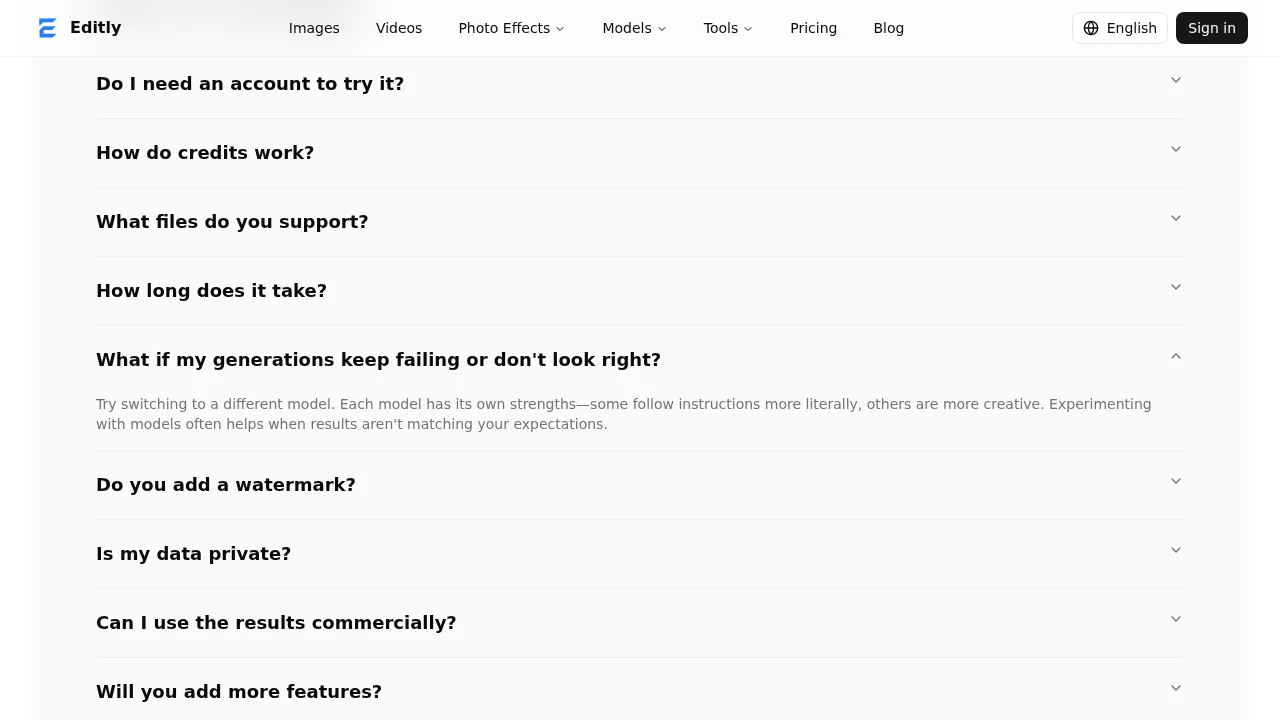
Screenshots
About Editly
Editly combines generative AI with practical image editing tools to streamline creative workflows. Users can create custom images by writing detailed descriptions of scenes, products, or characters, then refine results using optional reference images to guide style and composition. This dual approach—generation plus editing—makes it suitable for rapid ideation and production-ready work alike.
The platform excels at precision background removal, particularly for complex subjects like hair, jewelry, and fine details. Its advanced masking capabilities handle intricate edges that traditional tools often struggle with, delivering clean cutouts without manual refinement. This feature alone saves significant time for e-commerce, marketing, and design projects.
Image restoration is another core strength, enabling users to repair old photographs and low-quality images. The tool reduces noise, removes scratches, and recovers lost clarity while preserving natural facial features and textures. This makes it valuable for archival work, digitizing legacy photos, and enhancing legacy content for modern use.
Designed for practical, commercial workflows, Editly emphasizes speed and usability. The upload-prompt-preview-download cycle minimizes friction, and commercial licensing permits use in ads, thumbnails, concept art, and client projects. Downloads remain unbranded and free of forced watermarks, making outputs ready for immediate deployment across web and print.
Pros
Cons
Alternatives to Editly
Chronostates
Remove Sora Watermark.ai
Remove Sora Watermark.video
AI Image Extender.io
Klayn
TruShot App
AI Enhance Image.com