Featherless- Managed OpenClaw
Featherless OpenClaw eliminates AI agent hosting complexity with instant deployment and fully managed infrastructure.
Featherless- Managed OpenClaw at a glance
- Pricing
- Paid — from $100/month
- Rating
- ⭐ 5.0/5 · 4 reviews
- Key strengths
- Deploy open-source AI agents in under 5 minutes with zero infrastructure setup · Access to 30,000+ open-source models without vendor lock-in constraints · Fully managed platform eliminates maintenance, patches, and auto-restart failure
Screenshots
About Featherless- Managed OpenClaw
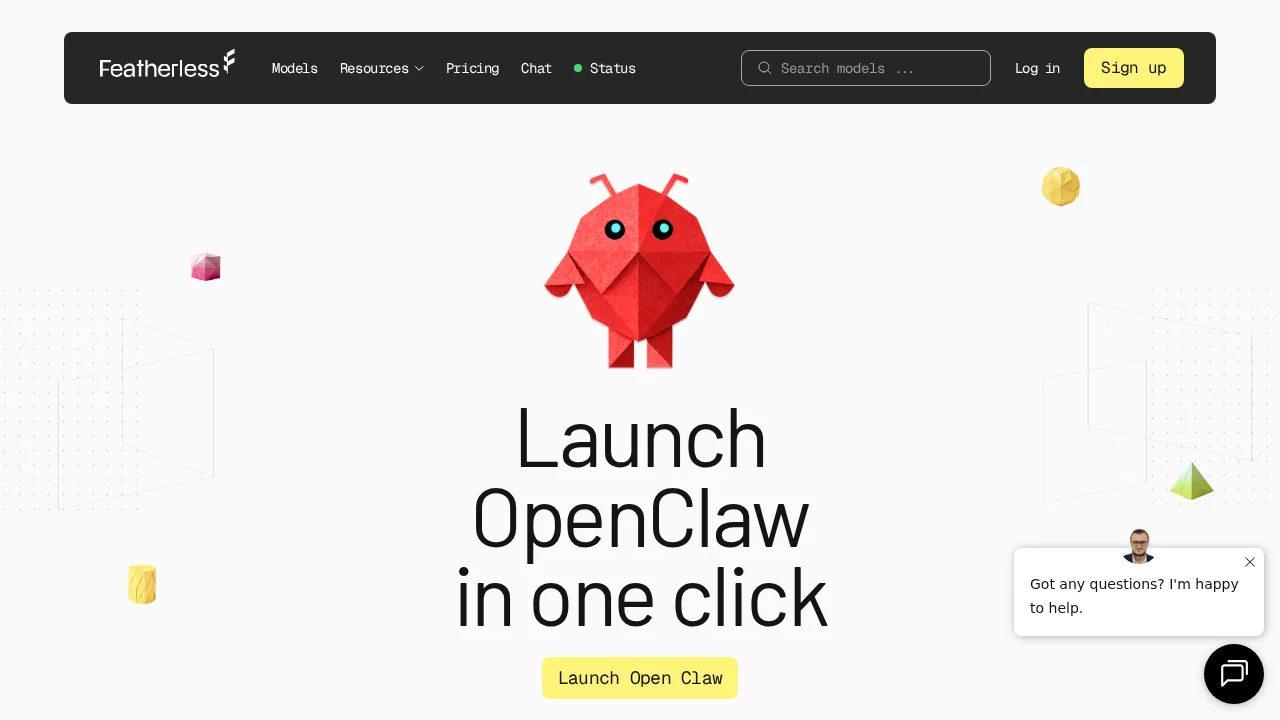
Featherless OpenClaw removes the operational burden of self-hosting AI agents by providing a managed platform that handles infrastructure, updates, and system reliability automatically. Deploy agents built on any of 30,000+ open-source models in under five minutes without managing servers, containers, or deployment pipelines. This dramatically accelerates your development cycle, letting you focus on building agent logic rather than troubleshooting infrastructure issues.
The platform eliminates common self-hosting pain points including manual setup, auto-restart failures, and unexpected downtime. With OpenClaw, your agents stay online and responsive without ongoing maintenance overhead. There's no need to monitor logs, apply patches, or manage resource allocation—Featherless handles all backend operations transparently.
Pricing follows a transparent model without per-token billing, making costs predictable and reducing surprise charges as your agents scale. This approach appeals to developers and teams who want the flexibility of open-source models without the operational complexity of traditional self-hosting. You get production-grade reliability combined with the freedom to choose your preferred open-source model architecture.
Pros
Cons
What is Featherless- Managed OpenClaw used for?
- AI inference
Alternatives to Featherless- Managed OpenClaw
KiloClaw
Nanoswarm: OpenClaw App
TaskFire
Clico
MyClaw.Host
88Agents
Tars