


Switching from Pika Labs to FlowSub
Comparez Pika Labs et FlowSub côte à côte — tarifs, points forts et faiblesses — pour décider si cela vaut la peine de changer.
Thinking about switching from Pika Labs to FlowSub in 2026? This guide compares the two side by side — pricing, ratings, strengths and weaknesses — so you can decide whether the move is worth it.
At a glance, FlowSub is rated 3.0/5 versus Pika Labs at 3.8/5 and on pricing, Pika Labs is Free while FlowSub is Paid.
Below you'll find a full feature, pricing and pros-and-cons breakdown of Pika Labs and FlowSub, curated by HyperStore, plus a verdict on who should switch.

Pika Labs transforms text prompts into engaging videos using AI, eliminating the need for advanced video editing skills.
- TarifFree · Free tier available
- Note⭐ 3.8/5
- API—
- Open source—
- Converts text prompts to videos instantly without video editing skills
- Intuitive interface accessible to non-technical users
- Saves significant time on video production workflows
- Suitable for marketing, education, and personal content creation
- AI-generated videos may require refinement for specific creative visions
- Output quality varies depending on prompt clarity and detail
- Limited control over granular video elements compared to traditional editing
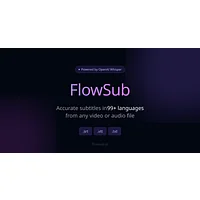
FlowSub is an AI subtitle generator that transforms video and audio files into accurate, multi-language captions instantly.
- TarifPaid · $5.99/month
- Note⭐ 3.0/5
- API—
- Open source—
- Supports multiple export formats for universal compatibility
- Multi-language transcription for global content reach
- Free tier available to test before upgrading
- Fast, automated subtitle generation from any audio source
- Subtitle quality depends heavily on audio clarity and background noise
- Advanced features like translations require paid Pro subscription
- Accuracy may decline with poor audio quality or unclear speakers
Pourquoi passer de Pika Labs à FlowSub ?
- FlowSub: Supports multiple export formats for universal compatibility
- FlowSub: Multi-language transcription for global content reach
- FlowSub: Free tier available to test before upgrading
- FlowSub: Fast, automated subtitle generation from any audio source
- Pika Labs — AI-generated videos may require refinement for specific creative visions
- Pika Labs — Output quality varies depending on prompt clarity and detail
- Pika Labs — Limited control over granular video elements compared to traditional editing