
Genie - AI Data Assistant
Genie is an AI data assistant that lets business users query and visualize data without writing SQL.
Genie - AI Data Assistant at a glance
- Best for
- Data Analysts
- Pricing
- Paid — from $20/month
- Key strengths
- Eliminates need for SQL expertise—ask questions in plain language · Supports 6+ major data sources in single unified interface · Self-hosting option keeps sensitive data on your own servers
Screenshots
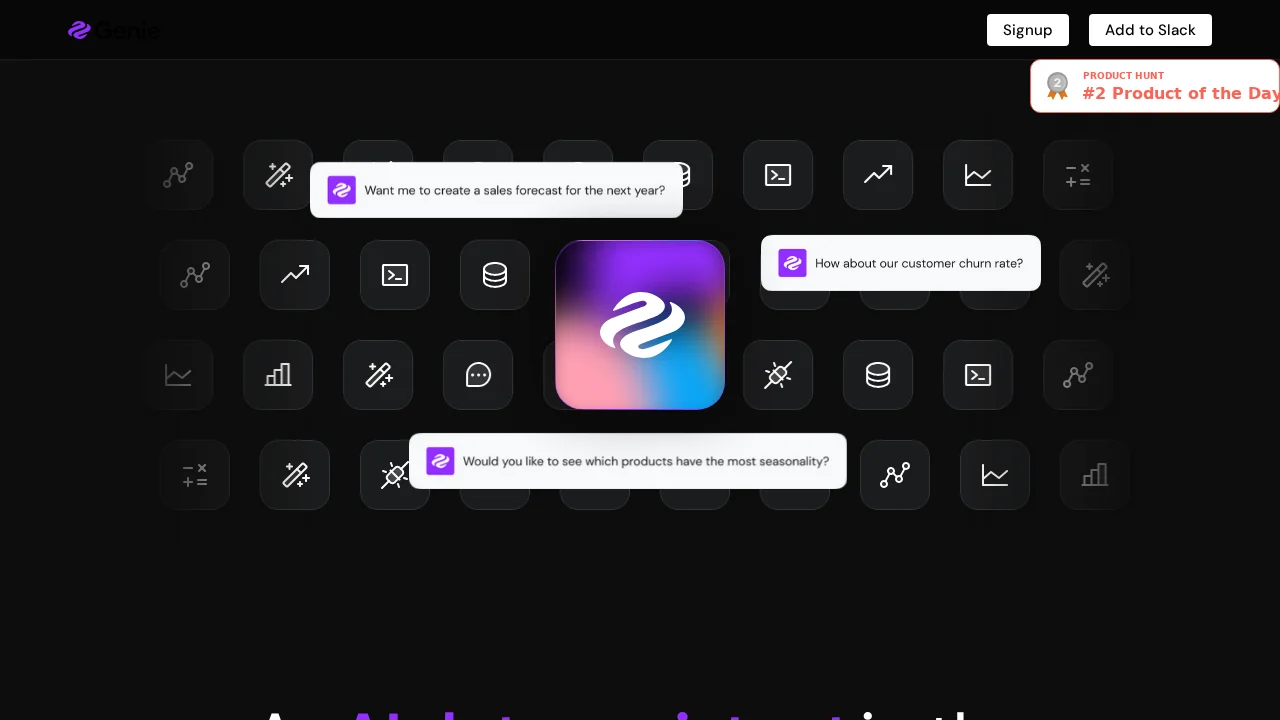
About Genie - AI Data Assistant
Genie transforms how teams interact with data by replacing complex SQL queries with simple, conversational questions. Users can ask natural language questions and receive instant answers with visualizations, making data analysis accessible to everyone regardless of technical expertise. The tool integrates seamlessly into existing workflows through Slack and Teams, or operates independently as a standalone application.
The platform connects to multiple enterprise data sources including PostgreSQL, Snowflake, BigQuery, Redshift, Airtable, Google Sheets, and MongoDB. This broad compatibility ensures organizations can leverage their existing data infrastructure without costly migrations or workarounds. Users can ask follow-up questions iteratively, exploring data insights and generating visual reports on demand.
Genie prioritizes data security and privacy through self-hosting capabilities, keeping API keys and security credentials within your own servers and virtual private networks. This architecture eliminates data transfer risks and accelerates query performance by keeping computations local. Institutional clients benefit significantly from these security-first design choices combined with robust data quality management.
By automating routine data inquiries, Genie reduces operational costs and frees data teams from repetitive reporting tasks. Organizations gain faster insights, improved decision-making speed, and measurable efficiency gains without requiring additional headcount or complex technical implementations.
Pros
Cons
Alternatives to Genie - AI Data Assistant
Analytify - A GenBI Platform
DealNavigator.Ai
GA4.so
Hanalyzer.ai
MyReport
SportBot AI
Wandercrafted