INLINER
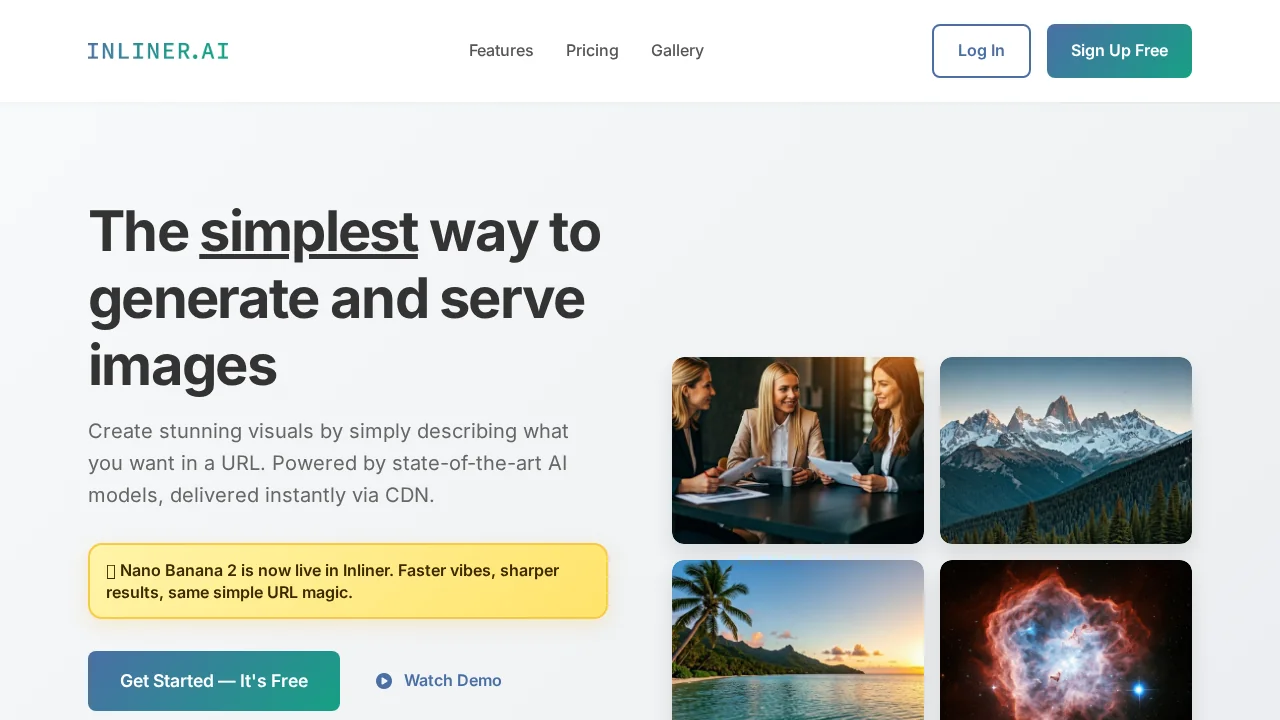
INLINER generates and serves AI images via simple URL parameters, with instant CDN delivery and persistent caching.
INLINER at a glance
- Pricing
- Free — from $9.99/month
- Rating
- ⭐ 4.4/5 · 16 reviews
- Key strengths
- URL-based generation eliminates dashboard navigation and simplifies developer in · Automatic CDN delivery and persistent caching reduce load times and storage over · Batch generation enables creating multiple image variations simultaneously
Screenshots
About INLINER
INLINER streamlines image generation by converting text descriptions into visual assets through an intuitive URL-based interface. Instead of navigating complex dashboards, users embed image prompts directly into project URLs, triggering instant AI-powered generation and delivery through a global CDN. This approach makes dynamic image creation accessible to developers, designers, and content creators without specialized technical knowledge.
The platform excels at batch processing, enabling users to generate multiple image variations simultaneously for campaigns, product listings, or content libraries. Generated images are automatically cached and remain persistently accessible via their original URLs, eliminating the need for manual asset management or separate storage solutions. This persistence ensures consistency across projects and simplifies integration workflows.
Beyond generation, INLINER supports direct image editing through URL modifications, allowing users to refine and adjust previously created visuals without regenerating from scratch. This capability reduces iteration time and simplifies workflows for teams managing large image portfolios. The tool integrates seamlessly into web applications, CMS platforms, and HTML implementations, making it suitable for websites, email campaigns, social media, advertising, and presentation materials. No complex setup or API integration is required—users simply log in and use the tool within standard HTML tags.
Pros
Cons
Alternatives to INLINER
SellShots
VisualGPT
Hireable Headshots
Mintshot
VibePaint.ai
GPT Caricature
AvatarStyle