Lingvanex
Lingvanex is a neural machine translation platform supporting 109 languages for text, voice, and document translation.
Lingvanex at a glance
- Pricing
- Freemium
- Key strengths
- Supports 109 languages with over 10,000 translation pairs · Cloud and on-premise deployment options for privacy control · Custom glossaries for domain-specific terminology consistency
Screenshots
About Lingvanex
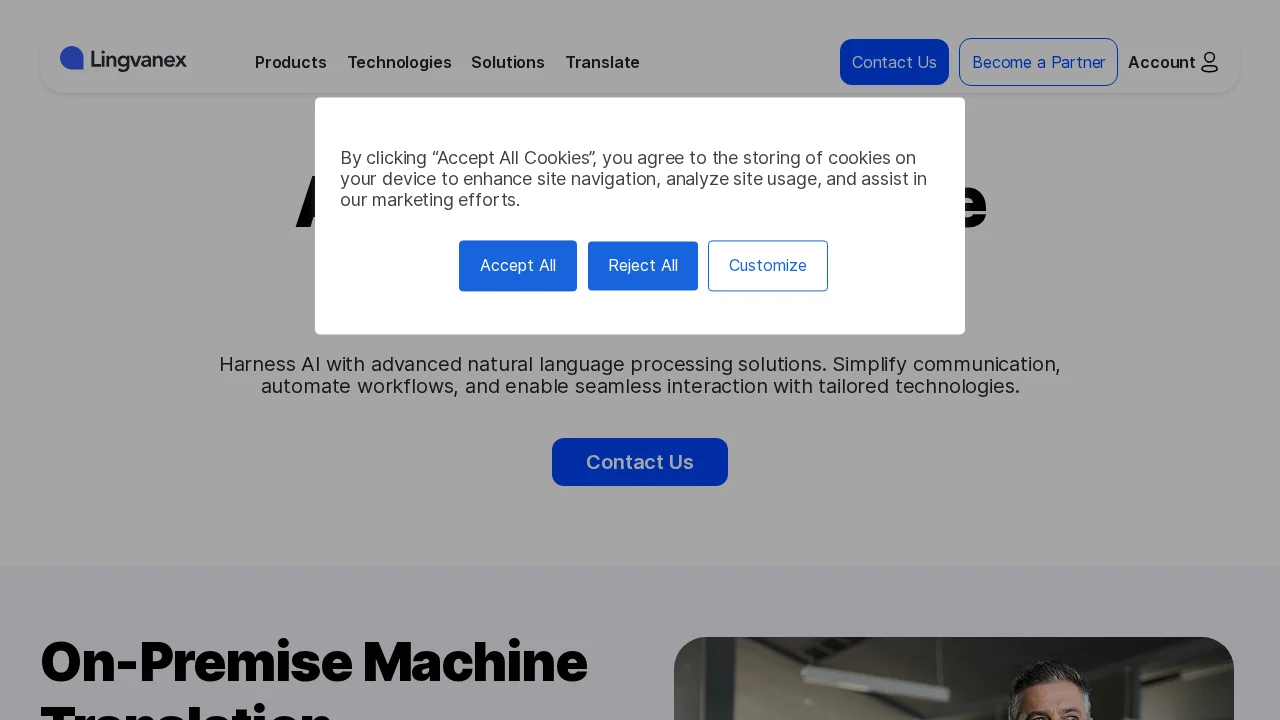
Lingvanex delivers powerful machine translation capabilities across multiple formats, enabling users to translate text, speech, images, documents, and website content with neural machine translation technology. The platform supports over 10,000 translation pairs across 109 languages, making it suitable for global communication and content localization needs. Its neural approach improves translation quality and consistency, helping teams and individuals communicate effectively across language barriers without manual translation delays.
The platform excels in flexibility through deployment options that cater to different security and infrastructure requirements. Users can choose between cloud-based solutions for quick implementation or on-premise installations for organizations prioritizing data privacy and control. This dual approach ensures Lingvanex adapts to various enterprise policies and compliance frameworks, from startups to large corporations handling sensitive information.
Customization features like custom glossaries allow users to define translations for industry-specific terminology, brand names, and specialized vocabulary. This capability ensures translations maintain consistency and accuracy within particular domains, whether for legal documents, technical manuals, or marketing materials. The glossary system helps teams establish standard translation practices across all projects and departments.
Lingvanex integrates seamlessly across Windows, macOS, Linux, iOS, Android, and web environments, with browser extensions and chatbot integrations expanding accessibility. Users can translate content directly from desktop applications, mobile devices, or web interfaces, while browser extensions simplify on-the-go translation tasks. This cross-platform availability ensures translation tools remain accessible regardless of device or workflow preference.
Pros
Cons
Alternatives to Lingvanex
SonicCaption
Pairaphrase
Doclingo
Lyndium
CAMB.AI
Translation-API.com
LinkedIn Speak Translator