
Pixal3D
Pixal3D converts 2D images into high-fidelity 3D assets with PBR textures and GLB export in seconds, offering an open-source image-to-3D pipeline.
Pixal3D at a glance
- Pricing
- Free
- Key strengths
- Open-source under MIT license for full self-hosting control · PBR-ready GLB exports drop into real-time engines immediately · Single and multi-view input for flexible capture setups
Screenshots
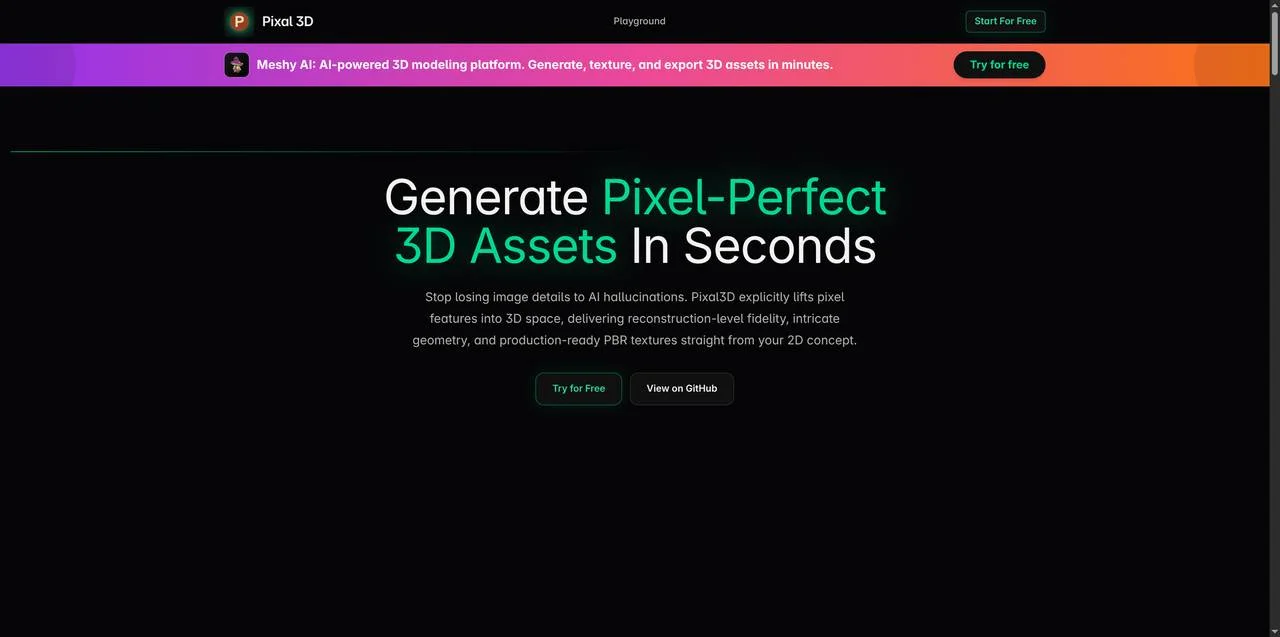
About Pixal3D
Pixal3D brings image-to-3D reconstruction within reach of any developer or creator who needs production-ready assets without a scan rig or modeling session. The framework projects pixel features directly into a 3D volume rather than relying on canonical-space guesses, which means the geometry and materials stay faithful to what is visible in the input view. For studios and indie teams alike, this shortcut removes one of the most expensive steps in 3D content creation.
Multi-view input is supported alongside single-image workflows, giving users flexibility for concept art, photographs, or staged captures. Each result ships as a GLB mesh complete with PBR textures covering base color, normal, and roughness channels, so assets drop cleanly into real-time engines, AR viewers, and DCC tools without extra material setup.
The model is published as open-source code under the MIT license, backed by research from Tsinghua University and TencentARC and accepted to SIGGRAPH 2026. That pedigree signals both academic rigor and a commitment to reproducible pipelines for teams that want to self-host, fine-tune, or audit the underlying code.
Practically, Pixal3D compresses hours of manual modeling and UV unwrapping into a few seconds of inference, letting rapid-prototyping workflows iterate on look and feel before committing to full production assets.