Playroom
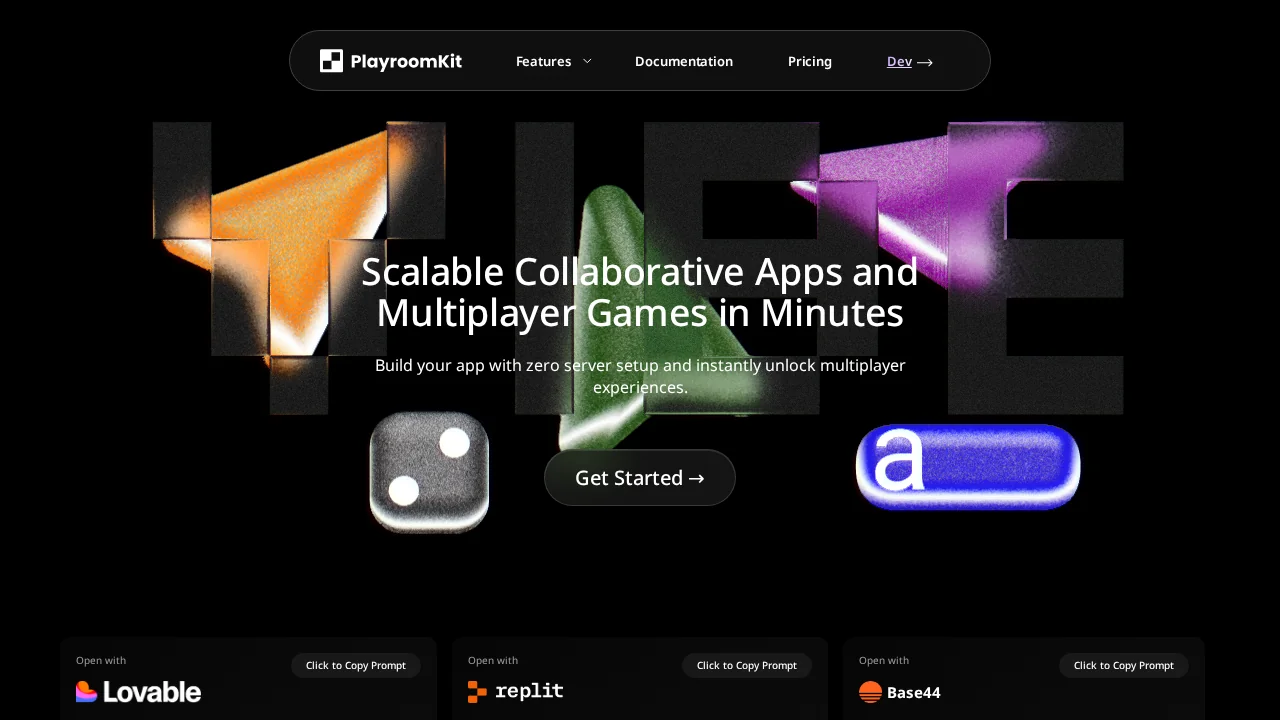
Playroom enables developers to build scalable multiplayer apps and games in minutes without server setup.
Playroom at a glance
- Pricing
- Freemium
- Key strengths
- Zero server configuration required for multiplayer backends · Supports 7+ major frameworks and game engines · Real-time state synchronization across players
Screenshots
About Playroom
Playroom is a real-time multiplayer backend platform that eliminates the complexity of server configuration and networking infrastructure. Developers can focus entirely on product experience while Playroom handles backend synchronization, state management, and real-time communication automatically. This dramatically reduces development time for multiplayer features that would traditionally require weeks of infrastructure planning.
The platform supports major frameworks and game engines, including React, Next.js, Vue, Angular, Unity, Godot, Three.js, and Playcanvas. Whether you're building collaborative web applications, multiplayer games, or interactive social experiences, Playroom provides the backend foundation needed for reliable, scalable deployments. Integration happens quickly through straightforward APIs, allowing teams to ship live multiplayer experiences without deep backend expertise.
Playroom handles real-time state synchronization across all connected players, ensuring consistent gameplay and collaboration. The infrastructure automatically scales to accommodate growth, making it suitable for both indie projects and larger commercial applications. By abstracting away networking complexity, the platform lets developers concentrate on gameplay mechanics, user experience, and product differentiation rather than server management.
Features
- Zero server setup for multiplayer backends
- Real-time state synchronization across players
- Support for React, Next.js, Vue, Angular frameworks
- Unity, Godot, Three.js, and Playcanvas game engine support
- Scalable infrastructure for collaborative apps and games
- Quick integration — ship multiplayer experiences in minutes
- Real-time multiplayer backend API