Raghim AI
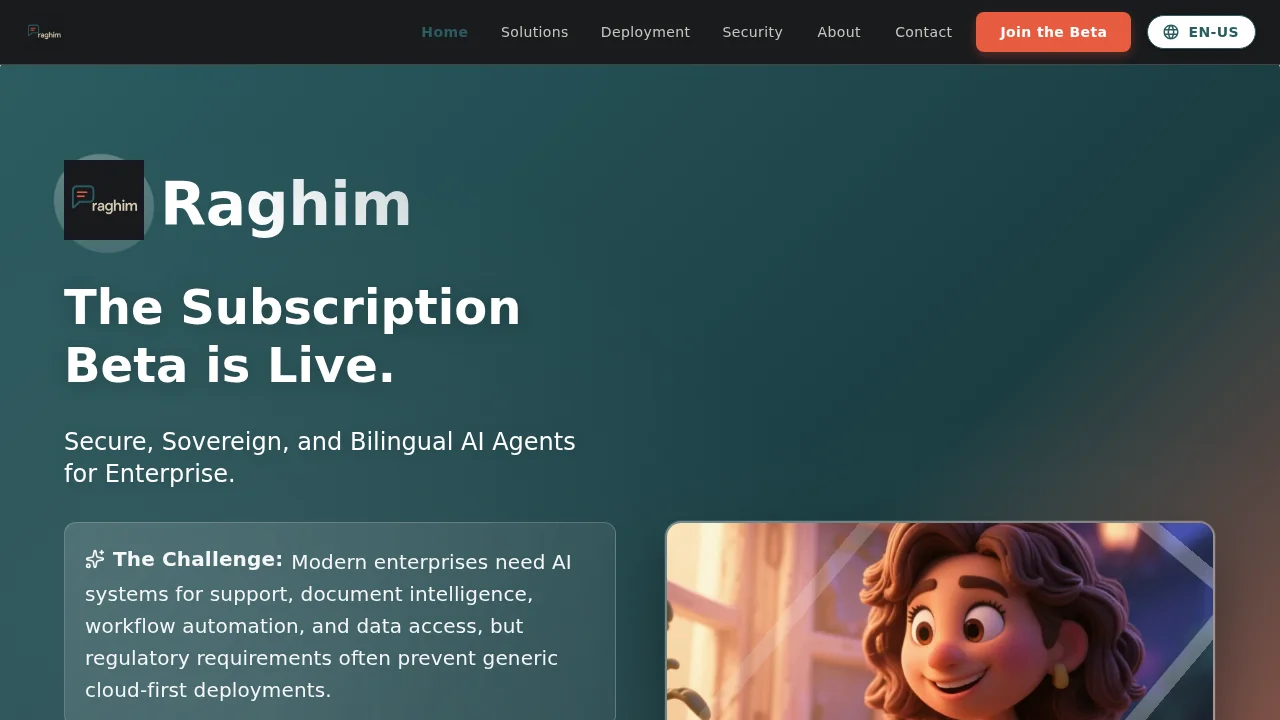
Raghim AI is an enterprise platform for deploying secure, sovereign AI agents with flexible self-hosted or managed options.
Raghim AI at a glance
- Pricing
- Free — from $20/month
- Rating
- ⭐ 5.0/5 · 2 reviews
- Key strengths
- Flexible deployment options: self-hosted or managed with full data sovereignty · Enterprise-grade security built for regulated industries and compliance · Simplified agent flow builder for rapid development and iteration
Screenshots
About Raghim AI
Raghim AI empowers enterprises to build and deploy AI agents and assistants while maintaining complete control over data security and sovereignty. The platform offers two deployment models: self-hosted Docker-based infrastructure that keeps all data within your own systems, or managed deployment for organizations seeking faster rollout with dedicated, secure hosting. This flexibility allows companies to choose the architecture that best aligns with their compliance requirements, data governance policies, and operational preferences.
The platform enables teams to construct sophisticated agent flows and execute integrated tools without requiring extensive AI expertise. By abstracting the complexity of agent orchestration, Raghim AI streamlines the process of automating business processes, customer interactions, and knowledge work. Organizations can prototype and iterate on agents rapidly while maintaining enterprise-grade security standards throughout the development lifecycle.
Raghim AI addresses critical concerns for regulated industries and security-conscious enterprises. Whether your organization operates in healthcare, finance, government, or other sensitive sectors, the platform's deployment flexibility ensures you meet regulatory requirements like data residency, privacy mandates, and audit trails. The self-hosted option provides maximum control for organizations with strict infrastructure policies, while managed deployment reduces operational overhead for teams prioritizing speed to market.
Pros
Cons
What is Raghim AI used for?
- Chatbots
- Data privacy compliance
Alternatives to Raghim AI
LightSite AI