Rails Guard
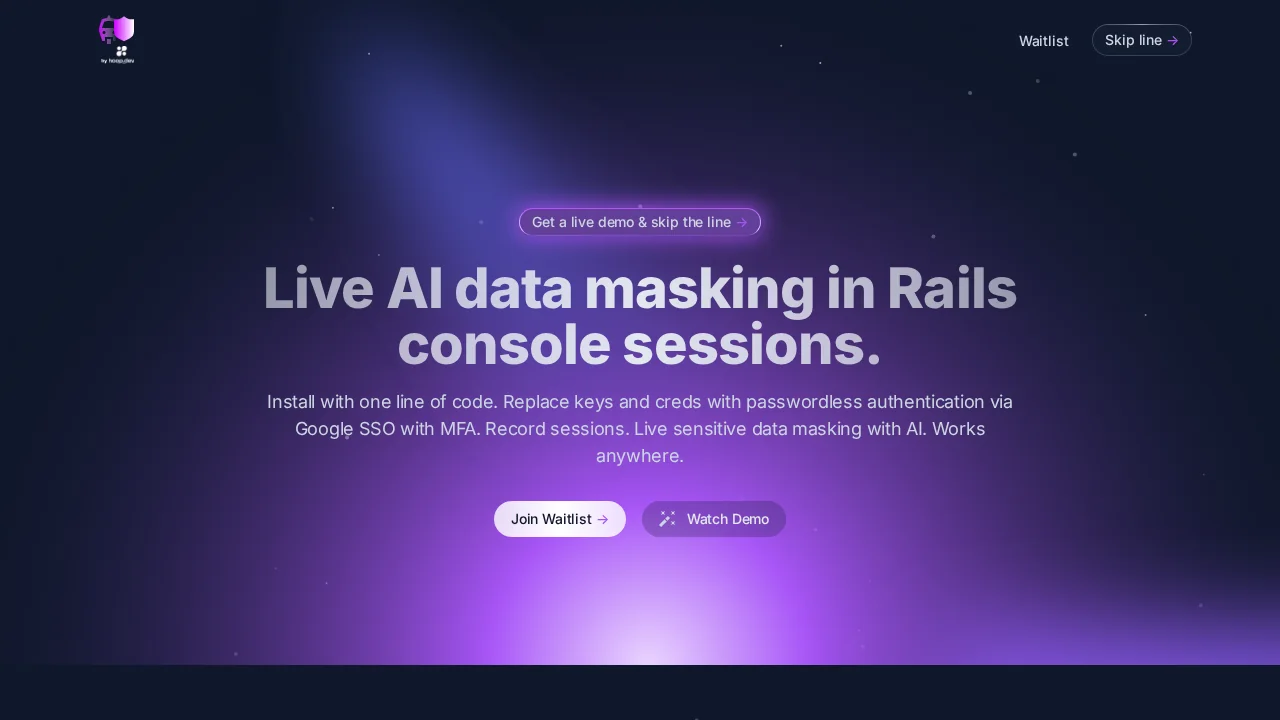
Rails Guard secures Rails console sessions with AI-powered data masking and passwordless authentication.
Rails Guard at a glance
- Pricing
- Freemium
- Key strengths
- One-line installation with zero workflow disruption · AI masks PII in real-time without manual configuration · Passwordless auth eliminates credential management burden
Screenshots
About Rails Guard
Rails Guard transforms Rails console security by combining passwordless authentication with intelligent data protection. Using Google SSO and multi-factor authentication, it eliminates the need for static keys and credentials while maintaining seamless access to your development environment. The tool integrates with a single-line installation, requiring no modifications to existing workflows or client configurations.
The platform's AI-driven data masking automatically detects and filters personally identifiable information in real-time, protecting sensitive customer data without requiring manual setup or data catalogs. Every console session is recorded and fully searchable, enabling complete auditability of operations performed by team members. This creates a comprehensive audit trail that helps organizations meet compliance requirements including HIPAA, SOC 2, PCI, and GDPR.
Beyond security, Rails Guard identifies patterns in repeated console operations and converts them into no-code user interfaces, reducing reliance on direct console access. The platform automates user and group management while enforcing just-in-time access grants, ensuring team members only have permissions when needed. All sensitive data remains masked throughout recordings, combining security with operational transparency for streamlined code reviews and incident investigation.