SQLFlash
SQLFlash is an AI-powered SQL optimizer that eliminates bottlenecks and improves query performance automatically.
SQLFlash at a glance
- Pricing
- Free — from $18.80/month
- Rating
- ⭐ 5.0/5 · 1 reviews
- Key strengths
- Automated SQL optimization reduces manual tuning workload significantly · Works across multiple database engines with broad compatibility · Clear transparency through diff viewer and optimization explanations
Screenshots
About SQLFlash
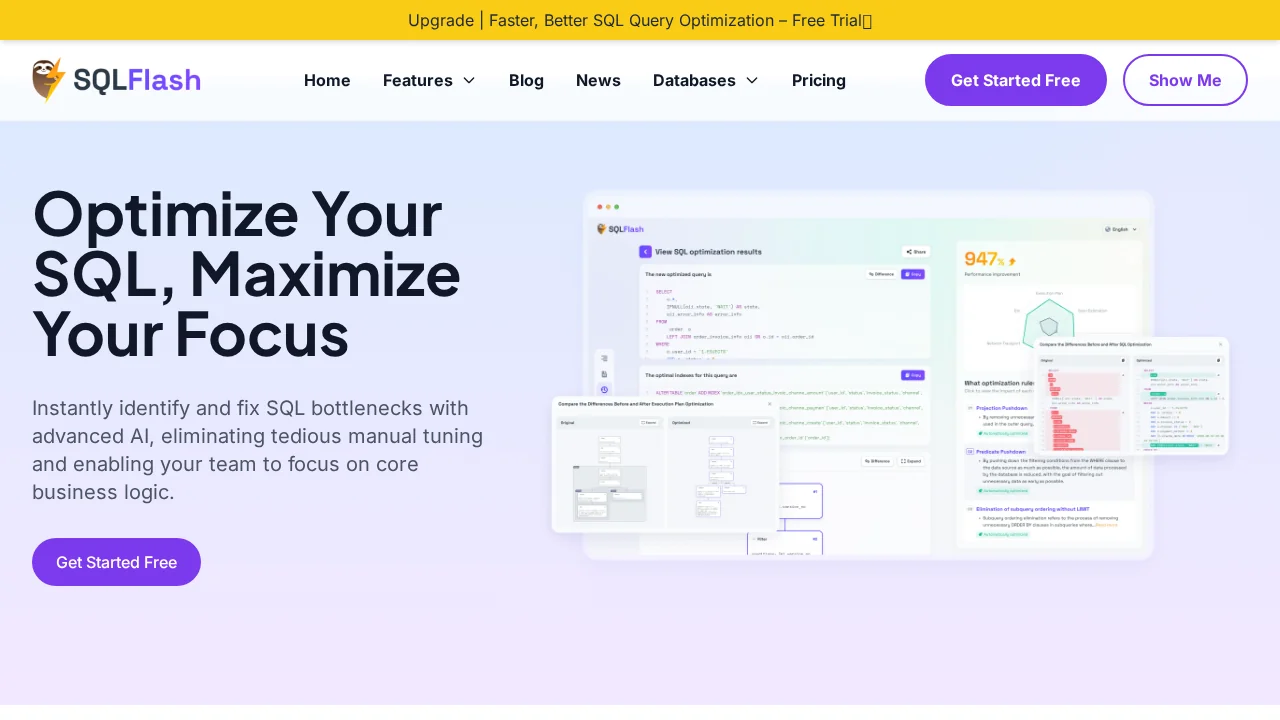
SQLFlash delivers intelligent SQL optimization without requiring manual tuning or deep database expertise. The AI-driven engine automatically detects performance bottlenecks, analyzes query execution plans, and rewrites inefficient SQL statements to dramatically improve speed. By automating optimization tasks, development teams can redirect their focus toward building core business logic instead of wrestling with database performance issues.
The platform supports optimization across multiple database engines and includes advanced features like MyBatis XML auto-rewrite for seamless integration with existing codebases. Real-time performance scoring provides immediate feedback on optimization impact, while expert-designed bottleneck detection identifies issues that might otherwise go unnoticed. Smart index recommendations suggest structural improvements backed by cost-benefit analysis.
Transparency is built into every optimization decision. SQLFlash explains its recommendations through a dual-pane SQL diff viewer that shows before-and-after queries side-by-side, an AI query plan explainer that demystifies execution strategies, and an optimization step journal that documents all changes. This visibility ensures teams understand exactly what changed and why. Enterprises benefit from bank-grade data privacy standards, making SQLFlash suitable for regulated industries handling sensitive customer information.
Organizations across restaurants, e-commerce, financial services, and education have successfully deployed SQLFlash to accelerate everything from historical order retrieval to page load times. The platform transforms SQL performance within minutes, delivering measurable improvements without requiring extensive configuration or specialized expertise.
Pros
Cons
Alternatives to SQLFlash
Releem