
Tokenhot
Tokenhot is a unified API gateway for large language models, aggregating hundreds of leading AI providers with pay-as-you-go pricing.
Tokenhot at a glance
- Pricing
- Paid — from $10/unit
- Key strengths
- Single API gateway eliminates managing multiple provider accounts · Transparent pay-as-you-go pricing with no mandatory subscriptions · Intelligent routing and aggregated purchasing reduce API costs
Screenshots
About Tokenhot
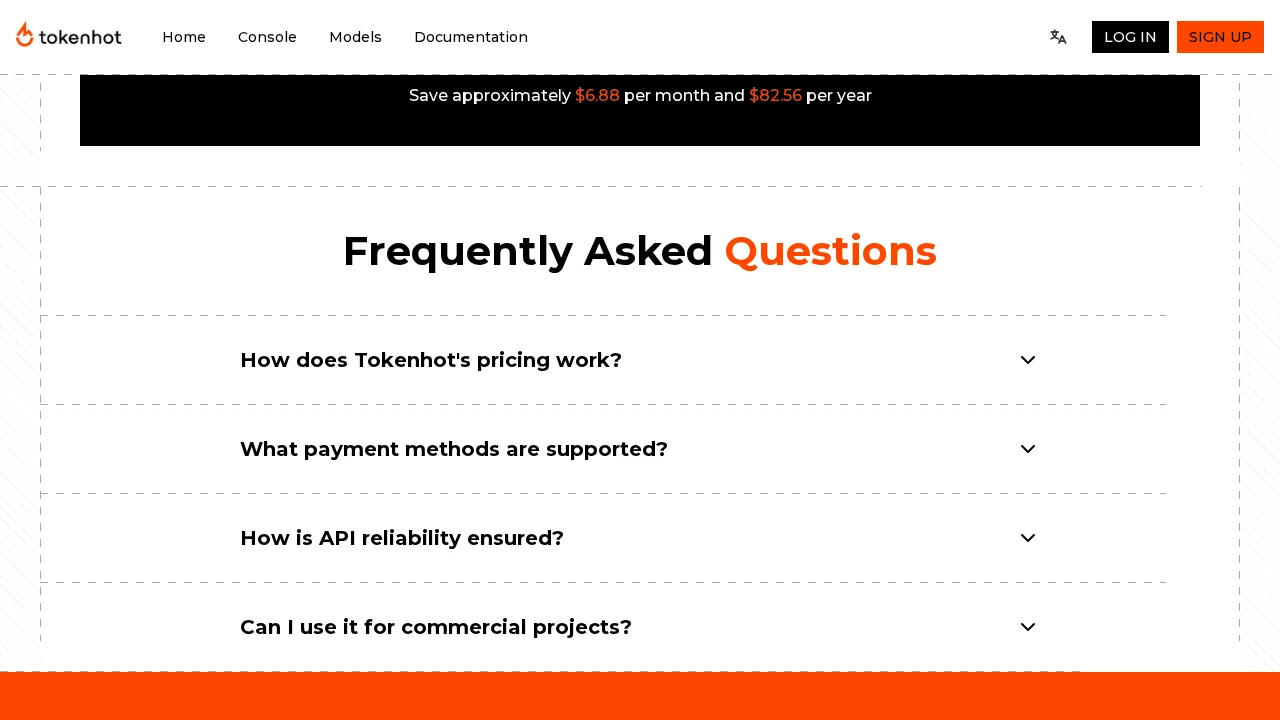
Tokenhot streamlines AI integration by providing a single API endpoint to access hundreds of language models from major providers including OpenAI, Claude, Gemini, and DeepSeek. Rather than managing separate accounts and API keys for each platform, developers can consolidate their LLM usage through one unified interface, reducing complexity and operational overhead.
The platform employs intelligent routing and aggregated purchasing to deliver meaningful cost savings on API expenses. By optimizing request distribution across providers and negotiating better rates through volume, Tokenhot helps teams reduce their AI infrastructure spending while maintaining flexible, usage-based billing without mandatory subscriptions.
Reliability is built into Tokenhot's architecture through multi-channel redundancy and automatic failover mechanisms, ensuring consistent uptime for production applications. The platform supports integration with popular development tools like Cursor and VS Code, enabling faster code completion with lower latency. Automation platforms such as Dify and FastGPT can be powered by Tokenhot to create sophisticated AI workflows.
Developers benefit from comprehensive documentation, a streamlined SDK, and global low-latency gateways that minimize response times regardless of geographic location. The transparent, usage-based pricing model eliminates surprise charges and provides full visibility into API costs, making budgeting predictable for teams of any size.
Pros
Cons
Alternatives to Tokenhot
MCP Showcase
Defapi
EvoLink
Cloudir | LLM Ops
APIPASS
EUrouter
APIPod