Tolgee AI Translator
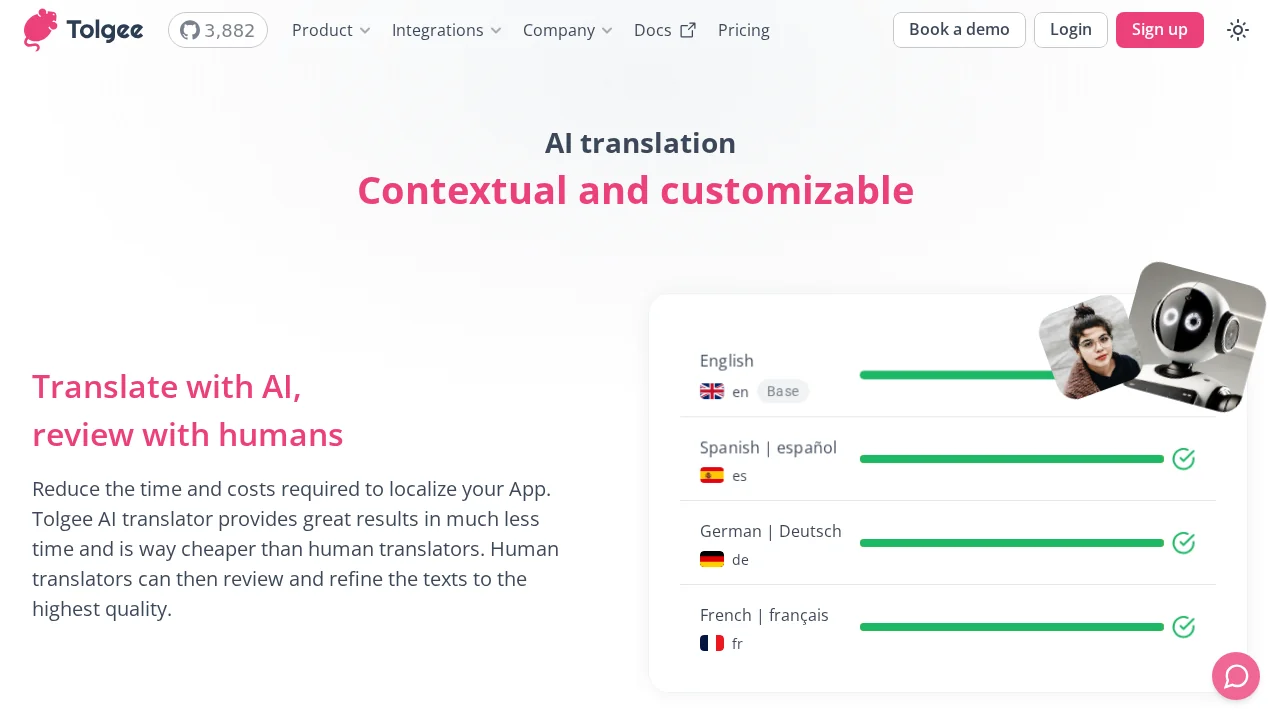
Tolgee AI Translator is an open-source localization platform that automates translation workflows with context-aware AI for developers.
Tolgee AI Translator at a glance
- Pricing
- Free — from $42/month
- Rating
- ⭐ 4.2/5 · 5 reviews
- Key strengths
- Context-aware AI translations reduce errors from missing meaning · Open-source design provides transparency and customization control · Fast setup and integration minimize onboarding time
Screenshots
About Tolgee AI Translator
Tolgee AI Translator streamlines the localization process by combining autonomous translation capabilities with developer-friendly integration. Unlike traditional translation tools that treat text in isolation, Tolgee prioritizes context awareness, ensuring that AI translations maintain accuracy and cultural relevance across different application environments. This approach significantly reduces translation errors that occur when meaning depends on surrounding code or interface design.
The platform is built as an open-source solution, giving developers full transparency and control over their localization infrastructure. Its easy setup process eliminates complex configuration steps, allowing teams to integrate translation automation into their projects quickly without extensive onboarding or technical overhead. This accessibility makes it suitable for projects of varying sizes and complexity levels.
Developers benefit from reduced manual translation effort and faster time-to-market for multilingual applications. By automating routine translation tasks while maintaining contextual accuracy, teams can focus on refining content quality and addressing edge cases that require human judgment. The autonomous translation features adapt to project-specific terminology and brand voice, creating more cohesive user experiences across languages.
The platform's architecture supports seamless integration into existing development workflows, enabling continuous localization as part of the deployment pipeline. This reduces the friction between development cycles and translation updates, keeping applications synchronized across language versions.
Pros
Cons
Alternatives to Tolgee AI Translator
RewriteBar
EVcourse
Doclingo
Translation-API.com
Pismo