Best AI Tools for Small Business Owners 20 apps
Small business owners wear every hat in the company: marketer, accountant, salesperson, customer support, and operations lead, often within the same working day. The best AI tools for small business owners are the ones that quietly take the most repetitive pieces of that workload off their plate, from building a website to drafting strategy to answering repetitive customer questions. This guide walks through the practical jobs AI can do for a small operation and the apps on HyperStore that handle them well today.
Why small business owners use AI
For most small businesses, AI is less about chasing a trend and more about buying back hours. Owners spend a big chunk of their week on tasks that don't directly grow revenue: writing copy, chasing invoices, building a basic site, validating the next product idea, or rebuilding the same internal workflow for the tenth time. AI tools compress those tasks into minutes, which lets the owner shift attention back to customers, hiring, and product.
The other reason is reach. A two-person team can now run campaigns, research competitors, and produce assets that previously required an agency. According to the U.S. Small Business Administration, adoption of AI tools among small business owners has been accelerating, with owners pointing to time savings and better decision making as the top benefits. The tools below are the ones that tend to deliver on those promises without a steep learning curve.
What to look for
Pricing that fits a small budget
Most small businesses can't commit to enterprise contracts, and the cost of a tool needs to be weighed against the hours it actually saves. Freemium and free tiers are useful for trying a product before paying, while paid plans should clearly map to a specific workflow that pays for itself within a month. Look for transparent pricing, the ability to cancel monthly, and no setup fees.
Low learning curve
Owners don't have an IT department to roll out new software. The best tools for this audience work in a browser or phone, need little onboarding, and produce something useful within the first session. If a tool requires a consultant to deploy, it's probably the wrong fit unless the use case is highly specialized.
Integrations with tools you already use
AI is most valuable when it slots into existing workflows rather than creating a new silo. Check whether the app connects to common small business stack: Google Workspace, Shopify, QuickBooks, Slack, and social channels. Good integrations mean the team doesn't have to switch contexts or re-enter data by hand.
Data privacy and control
Small businesses handle customer information, contracts, and sometimes health or financial data. Before uploading documents to any AI tool, review how the vendor stores and trains on that data. According to the Federal Trade Commission, small businesses are responsible for safeguarding customer data even when they use third party services, so privacy terms matter.
Best AI tools for small business owners
RiskOS AI Suite
RiskOS AI Suite embeds intelligent agents into risk workflows to automate decisions and enhance transparency. For a small business owner, it is most useful when decisions about vendors, contracts, or compliance need a consistent framework behind them. The freemium tier lets owners try the platform before committing budget to a paid plan.
Scopy.me
Scopy.me uses AI to help businesses develop comprehensive strategies quickly with data-driven insights and frameworks. Owners who would otherwise pay a consultant for a strategy deck can use it to produce a first draft in a single sitting, then refine. It is free, which makes it a low-risk starting point for owners who are new to AI-assisted planning.
Tinker
Tinker is a free AI creative suite by Shopify that generates videos, images, 3D models, and more on iOS and Android. Small businesses that need marketing assets for social or ads but can't afford a designer can use it to produce visuals on the fly. Because it lives on mobile, owners can create content between meetings without opening a laptop.
ValidatorAI
ValidatorAI helps entrepreneurs validate startup ideas, score viability, and launch with confidence using AI-powered analysis and real market data. For owners considering a new product line, location, or service pivot, the tool offers a structured way to pressure test the idea before spending money. The freemium model means the first round of validation is essentially free.
ApnaVikas – AI Soft Skills & Personality Coach
ApnaVikas is an AI soft skills coach powered by Enneagram research, helping professionals master communication and career growth. Small business owners who manage a team and lead client calls often find that people skills are the bottleneck to growth. It is a paid tool, aimed at owners who treat leadership development as an ongoing investment rather than a one-off course.
Cody
Cody is an AI business assistant that learns from your documents to deliver instant, accurate answers. Owners can load SOPs, policy docs, and product info once, and the assistant becomes an internal helpdesk for staff and a quick reference for the owner. The freemium tier and API access make it flexible for both solo use and a wider team rollout.
DoubleO
DoubleO is an AI automation platform that empowers non-technical teams to build and scale intelligent workflows without coding. Small businesses with repetitive back-office tasks, like data entry, lead routing, or report assembly, can automate them visually. It is a paid platform, best suited to owners who have already mapped a workflow and want to hand it off to software.
Durable AI Website Builder
Durable AI Website Builder creates professional, SEO-optimized websites in 30 seconds, with no coding required. For owners launching a new venture or refreshing an outdated site, it removes the most expensive blocker to getting online: a developer. The freemium tier is enough to publish a basic site, and paid plans add custom domains and deeper SEO tools.
GetSpiced
GetSpiced is an AI mentoring platform that learns your goals and preferences to boost productivity for entrepreneurs and creators. Owners who struggle to prioritize their week, or who want a sounding board for ideas, can use it as a daily check-in tool. It is free, which makes it easy to layer on top of an existing calendar and task system.
Ideas AI
Ideas AI generates thousands of startup concepts using advanced AI, ranked by 1.9M+ user votes to surface winning ideas. It is useful for owners in a brainstorming phase, whether exploring a side business, a new product, or a niche pivot. The voting layer adds a community signal that helps separate recurring ideas from one-off curiosities.
IFS Loops
IFS Loops deploys AI-powered digital workers to automate complex enterprise workflows with governed autonomy and mission-critical reliability. The platform is built for serious operational workloads and is best for small businesses whose core processes run on enterprise systems like IFS. The paid plan and API access reflect a more technical, integration-heavy use case.
Mixo
Mixo is an AI website builder that creates professional business websites in seconds, no coding required. It is a strong match for owners testing a new idea who need a landing page live by the end of the day, complete with email capture and basic analytics. The freemium tier is enough to validate demand before paying for a custom domain or premium features.
How to choose
Start with the job that costs you the most time or money each week, and pick one tool that targets it directly. If your biggest gap is a missing or weak website, Durable AI Website Builder or Mixo will get you online fastest. If you're still shaping the business idea itself, Ideas AI and ValidatorAI give you a structured way to test before you build. Once the foundation is in place, layer in Cody for internal knowledge, DoubleO or IFS Loops for workflow automation, and Scopy.me for strategy work. The creative and people side of the business is covered by Tinker and ApnaVikas, while GetSpiced acts as a daily productivity coach and RiskOS AI Suite helps where decisions need to be repeatable and well documented.

OtisAI
OtisAI is an AI virtual assistant that helps small businesses create, manage, and optimize multi-channel ad campaigns effortlessly.

aiOS
aiOS turns your business website into a texting AI employee that handles marketing, content, and leads across every major channel.

maxee.me
maxee.me is an AI-powered business analysis platform that helps SMEs optimize operations and unlock growth opportunities.

Sunny by Sunburnt AI
Sunny by Sunburnt AI streamlines operations for Australian SMBs, enhancing efficiency and productivity through automated processes.

HeyBoss AI
HeyBoss AI is an AI-powered no-code builder for creating websites and apps in minutes with integrated business tools.
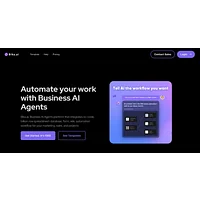
Bika.ai
Bika.ai streamlines solopreneur workflows with AI-powered automation for content, development, and market intelligence.
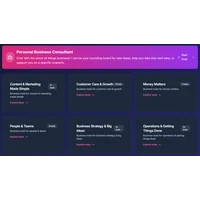
Better-Business.AI
Better-Business.AI empowers entrepreneurs with AI-driven insights and 24/7 business coaching through ready-made prompts.

D24 MEDIA - AI Website Builder
D24 Media AI Website Builder creates professional, SEO-optimized websites for small businesses in minutes without design skills.

Jinna.ai
Jinna.ai automates invoicing and payment follow-ups, helping small businesses streamline billing and improve cash flow.

Business AI
Business AI: Sales & Marketing uses GPT-powered tools to streamline lead generation, content creation, and customer relationship management.

Cambium AI
Cambium AI generates data-driven marketing plans for small businesses by analyzing your website and public data sources.

Foundor.ai
Foundor.ai is an AI-powered business planning platform that accelerates startup creation with instant templates and branding tools.

Imagine.bo
Imagine.bo acts as your AI tech co-founder, turning product visions into production-ready code without the overhead of dev shops.
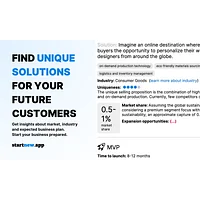
StartNew
StartNew is an AI business planning tool that helps entrepreneurs create strategies and launch ventures quickly.

AiAgent.app
AiAgent.app lets you create autonomous AI agents that break down complex goals into actionable tasks and execute them automatically.

Solo AI
Solo AI is an AI website builder that creates professional business websites without requiring coding knowledge.

AI Toolbar
AI Toolbar is a browser-based virtual assistant that boosts productivity with intelligent writing and automation tools.

Bizzy AI
Bizzy AI is an intelligent business consultant that analyzes your data and delivers actionable growth strategies.