
Lettria
Lettria is a no-code NLP platform that transforms unstructured text into actionable intelligence without coding.
Lettria at a glance
- Pricing
- Freemium
- Rating
- ⭐ 5.0/5 · 2 reviews
- Key strengths
- No-code interface eliminates need for NLP expertise or programming skills · Comprehensive data preparation tools reduce model training time significantly · Supports multilingual models for global business applications
Screenshots
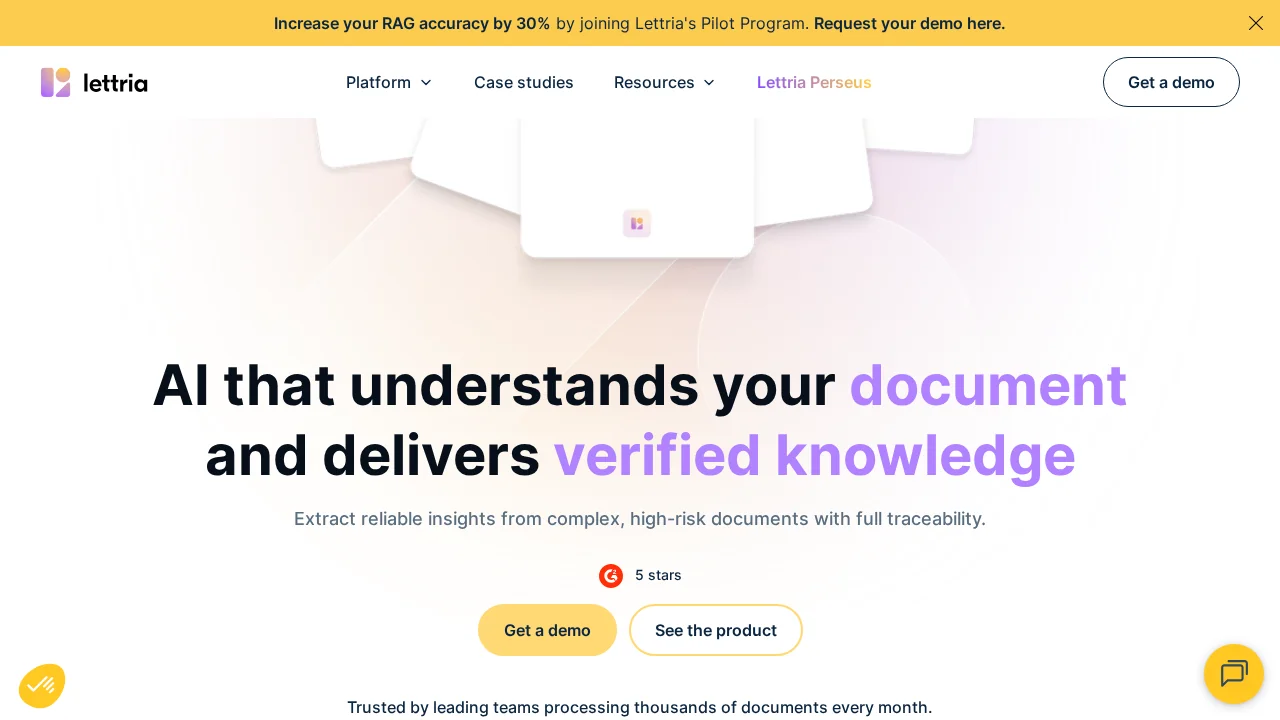
About Lettria
Lettria empowers organizations to unlock the full value of their textual data through an intuitive, no-code AI platform designed for natural language processing. The cloud-based solution eliminates barriers to NLP adoption by enabling business analysts, product teams, data engineers, and data scientists to collaborate seamlessly on text structuring and analysis tasks. Users can build customized NLP engines, extract insights from customer feedback and call transcripts, and deploy pre-trained or customizable multilingual models without requiring deep technical expertise.
The platform addresses a critical challenge in AI projects—failure rates caused by poor data preparation and management. Lettria provides a complete toolkit for collecting, cleaning, labeling, and annotating text data, alongside comprehensive ontology and dictionary management capabilities. This ensures high-quality datasets that lead to more reliable and accurate AI models. The automated annotation and data preparation features free data scientists from repetitive, low-value tasks, allowing them to focus on designing and deploying sophisticated AI solutions.
Lettria's practical applications span voice-to-CRM conversion, customer review analysis, and search engine optimization, delivering immediate business value across customer service, marketing, and operations teams. The platform's secured infrastructure protects sensitive data while accelerating time-to-insight, and its NLP APIs enable rapid deployment of projects across multiple use cases. By bridging the gap between business needs and technical implementation, Lettria makes advanced natural language processing accessible to entire organizations.
Pros
Cons
Alternatives to Lettria
Analytify - A GenBI Platform
DealNavigator.Ai
GA4.so
Hanalyzer.ai
MyReport
SportBot AI
Wandercrafted