PyGPT
PyGPT is an open-source desktop AI assistant powered by GPT-4, GPT-3.5, and DALL-E 3 with voice and vision capabilities.
PyGPT at a glance
- Pricing
- Free — from Free
- Key strengths
- Open-source with full cross-platform compatibility (Linux, Windows, Mac) · Advanced multimodal capabilities: vision, voice, text, and image generation · Built-in Python code execution and real-time internet search functionality
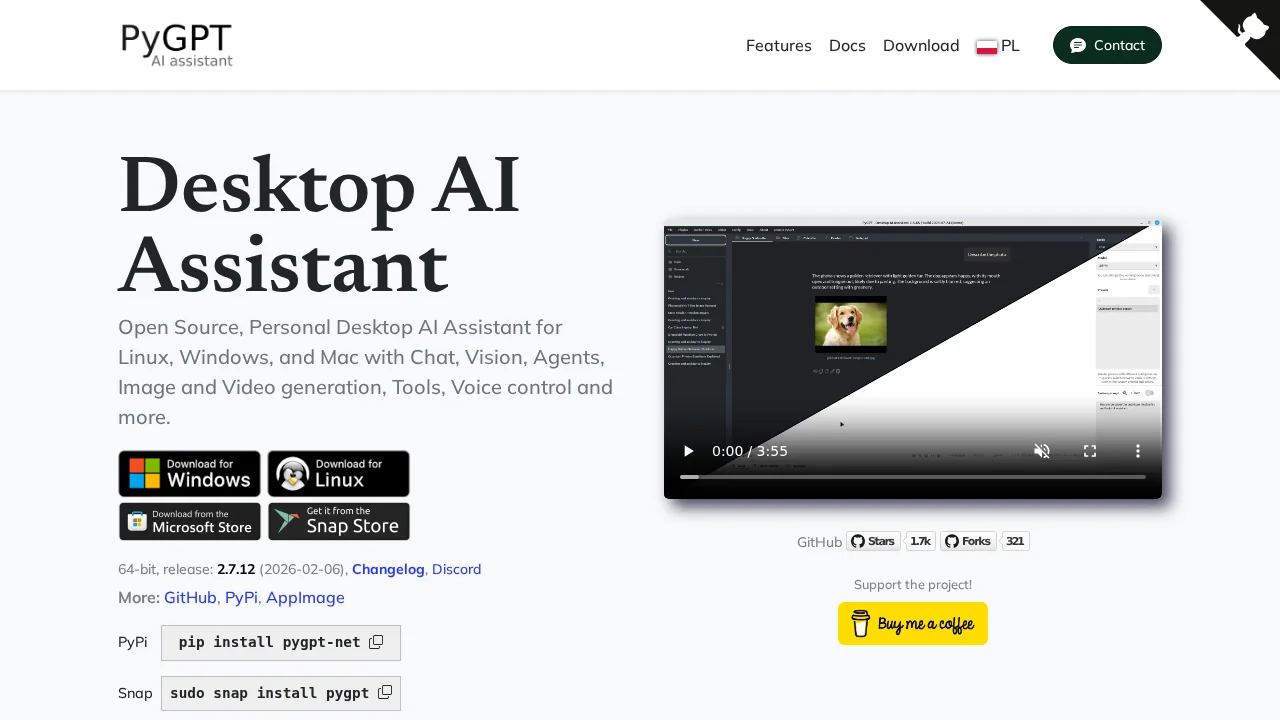
Screenshots
About PyGPT
PyGPT is a fully open-source desktop application that brings advanced AI capabilities directly to your computer. Powered by multiple GPT models including GPT-4, GPT-4 Vision, and GPT-3.5, along with DALL-E 3 for image generation, it provides a comprehensive AI assistant without requiring technical expertise. The tool works seamlessly across Linux, Windows, and Mac platforms, making it accessible to users regardless of their operating system preference.
The application excels at multimodal interactions through integrated speech synthesis and recognition powered by Microsoft Azure and OpenAI TTS, combined with voice input via OpenAI Whisper. Users can engage with PyGPT through multiple modes including chat, code completion, real-time vision analysis, and image generation. Advanced capabilities include live internet searching through Google integration, Python code execution, and persistent memory management for both short-term and long-term conversation context.
Flexibility and customization are at PyGPT's core, allowing users to define custom commands and extend functionality through a plugin system. The platform supports file uploads and downloads, enabling seamless document handling and data exchange. Integration with Langchain provides access to additional large language models, while the application maintains an intuitive, fully configurable interface that requires no prior AI knowledge. Operation requires an OpenAI API key, ensuring you maintain control over your data and API usage costs.
Pros
Cons
Alternatives to PyGPT
AppDeploy
Rabbitholes AI
remio: Your Personal ChatGPT
ChartGPT
WhatsApp Chatbot
SureThing.io
Notis