Google CC is Google's AI productivity hub inside Workspace, designed to bring AI-assisted writing, meeting recaps, and quick Gemini actions close to Gmail, Docs, Meet, and Calendar. The pitch is convenience: one entry point, one sign-in, one billing layer for everything AI you do at work. People tend to look for a Google CC alternative when their real work happens outside the Workspace bubble, when they want a tool with sharper focus on one specific flow, or when per-seat pricing stops making sense at their current team size.
Why look for a Google CC alternative?
Google CC is genuinely useful inside the Google stack. It sits close to Gmail and Drive, generates drafts in your usual tone, and pulls transcripts out of Meet without much setup. The trade-off shows up the moment your day stretches beyond Workspace: a freelancer writing in Notion, a salesperson whose deals happen in Zoom, or a developer living inside VS Code will notice that Google CC's reach flattens at the edge of the Google ecosystem.
Pricing is the second common trigger. Workspace AI tiers have crept up over the last year, and small teams or solo operators often find that a focused single-purpose tool covers the same ground for less—or for free. There is also a stylistic reason to switch: some users prefer tools with a clear opinion, while Google CC stays deliberately broad.
What to look for in a Google CC alternative
Workflow coverage vs. ecosystem depth
Google CC wins on ecosystem, not depth. A replacement either needs to match it inside your actual stack—which for most people means sticking with Google—or trade raw breadth for depth in one flow you do all day, such as meetings, typing, or voice.
Platform and integration fit
Where does your real work happen? Check that the tool runs on your operating system, hooks into the apps you already live in (Zoom, Teams, Slack, Notion, your editor), and does not require a per-seat minimum that does not fit your team size.
Privacy and data handling
AI productivity tools see your messages, transcripts, and keystrokes. Look for transparent data policies, opt-out controls for model training, and ideally on-device or local-first behavior for the captures that matter most, like voice memos or drafts in sensitive contexts.
Price-to-value at your scale
A free tier that covers your core workflow may beat a paid product that adds ten features you ignore. Weight the cost against what you would actually use daily, and be cautious of seat minimums that quietly inflate the bill.
The best Google CC alternatives
Caret
Caret takes a different lane. Rather than a dashboard of AI actions, it ships one Tab keystroke that completes your sentences inside any macOS app. Where Google CC lives in Gmail and Docs side panels, Caret follows you into Slack, Notion, Terminal, or your CRM, which makes it a strong pick for users whose typing is spread across many surfaces. It is a free download and works well as a quiet complement to—or lightweight replacement for—the drafting help Google CC offers inside Workspace.
Notis
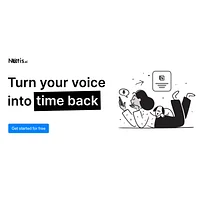
Notis captures voice messages from WhatsApp, Telegram, iMessage, and similar apps, then turns them into structured notes and tasks inside Notion. Compared with Google CC's meeting-and-email focus, Notis sits in the asynchronous-voice lane—useful for people who get more context from a 90-second voice memo than a long email thread. The trade-off is narrower scope: it is excellent for capturing voice into Notion, and not designed for drafting replies or summarizing live calls.
Supernormal App
Supernormal is the closest direct replacement if your main Google CC use case is meeting notes. It joins Google Meet, Zoom, Microsoft Teams, and Slack Huddles automatically, captures the transcript, and ships a shareable summary to wherever the team works. Google CC handles Meet transcripts through Gemini, while Supernormal is genuinely cross-platform on the meeting side and built specifically for the note-and-share flow. It suits distributed teams that hop between meeting tools and want one consistent record.
SureThing.io
SureThing.io is a different category—less of a head-to-head competitor to Google CC, more of a complement for builders. It connects the open-source AI ecosystem on GitHub with deployed, usable skills, so curating a stack of AI helpers does not require manual wiring. For users whose Google CC use overlaps with tinkering and shipping AI features, SureThing.io fills a tooling gap rather than replacing the productivity layer. Most readers will not switch from Google CC to SureThing.io; some will want both.
How to choose
Pick by the heaviest workflow in your week. If most of your AI work happens inside Google Workspace and you rarely leave it, Google CC is likely still the right starting point. If your day is meetings across Zoom and Teams, Supernormal will pull ahead quickly. If you draft in dozens of apps and want one quiet keystroke to help, Caret is the smartest trade. And if your team thinks in voice memos that need to land in Notion, Notis fills a gap Google CC does not address.
Frequently asked questions
Is there a free Google CC alternative?
Yes. Several of the strongest options on HyperStore—including Caret, Notis, Supernormal App, and SureThing.io—offer free tiers or fully free downloads. None bundle all of Google CC's breadth, but each covers a core flow at no cost.
What is the best Google CC alternative?
For meeting notes specifically, Supernormal is the category benchmark. For typing across every app, Caret is the strongest cross-surface option. The right answer depends on which Google CC workflow you actually rely on most.
Will I lose Gemini integration if I switch?
Yes—these alternatives do not plug into Gemini the way Google CC does. Most instead integrate with OpenAI, Anthropic, or other model providers, which can be a feature for users who prefer to avoid vendor lock-in.
How does Google CC compare to standalone AI tools?
Google CC is broad and ecosystem-friendly, while standalone tools tend to be deeper in one workflow. Independent productivity research from firms like Forrester consistently finds that focused tools outperform generalist suites on the specific jobs they target.
Can I use multiple Google CC alternatives together?
Yes, and many users do. A common stack is Caret for typing, Supernormal for meetings, and Notis for voice memos, with no meaningful overlap between them.
None of these tools mirrors Google CC exactly, and that is the point. The strongest alternatives trade Google's all-in-one convenience for sharper focus, better cross-platform reach, or pricing that fits smaller teams. Start with the workflow that costs you the most time today, and add the next tool only when you feel the gap.